How to Choose the Best Stacking Systems in 2026 begins with a practical question: what must the system move, store, and protect each day? Stacking Systems can improve floor use and make materials easier to access, but the right choice depends on load shape, weight, turnover, and available space. A neat product photo tells little. Measure the actual aisle width, ceiling height, pallet dimensions, and turning radius before comparing designs.
In 2026, buyers should assess load capacity, stability, installation needs, maintenance access, and compatibility with existing equipment. Ask suppliers for specifications, inspection guidance, and clear limits for uneven or changing loads. Check how operators will place and retrieve items, not only how many levels fit. Small details matter. A blocked sprinkler, awkward corner, or damaged beam can change a seemingly sound plan. Consider dust, moisture, and temperature, too, since operating conditions may affect materials and upkeep. Cost matters, but the lowest quote may omit anchors, training, or future adjustments. Compare the full ownership picture and confirm claims against documented data. If requirements remain uncertain, pause and test a representative layout first. That can feel slower. It is often cheaper than rebuilding. No single configuration is best for every facility, and even careful planning has blind spots. Review real workflows with the people who use the space, then choose a system that meets today's needs while allowing sensible changes later.
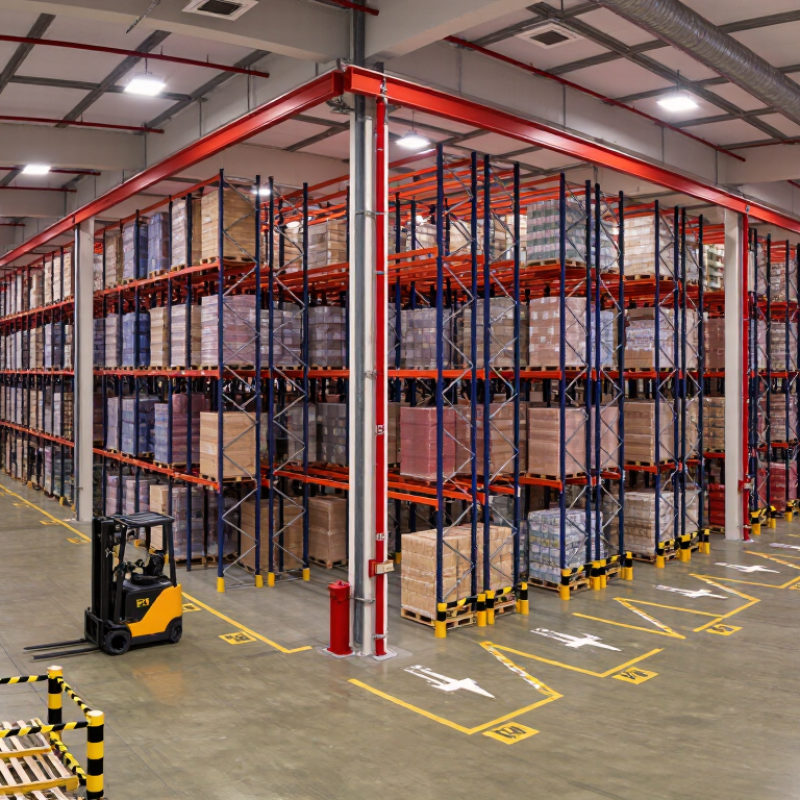
Define Load Profiles, SKU Mix, and Throughput Before Choosing a Stacking System
How to Choose the Best Stacking Systems in 2026
Define what the system must handle before comparing designs. Start with the load. Record each unit’s weight, dimensions, stability, and handling method. A tall, uneven pallet behaves differently from a compact carton. Include peak loads, not just average daily volume. Then map your SKU mix: note fast movers, slow movers, seasonal items, and products with unusual shapes. These details affect access, storage density, and replenishment work.
Tips: Measure actual loads on the floor. Review several weeks of order data. Ask operators where delays occur. Small details matter.
Throughput targets should reflect real operating conditions. Track picks or moves per hour during both normal shifts and busy periods. Consider travel distance, lift equipment, aisle space, and how often stock needs replenishing. A high-density layout may look efficient on paper but slow access if fast-moving items are stored poorly. Test assumptions with a sample layout or a short pilot. Forecasts are imperfect; ours often miss seasonal changes. Recheck the figures when order patterns or product dimensions change, and involve the people who move the loads every day.
Compare Selective, Drive-In, Push-Back, and Mobile Rack Configurations
Choosing a rack system starts with your inventory, not a catalog diagram.
Count active SKUs, pallet depth, and daily picks, then observe a real shift. Small details matter. Forklift turning space and replenishment timing can change which layout works.
Selective racks give forklifts direct access to every pallet, making them practical for many SKUs and frequent picking. They use more aisle space, though. Drive-in racks store pallets several positions deep, so they suit high-volume products with fewer SKUs. Forklifts enter the lanes, which requires consistent pallet sizes and careful driving. That trade-off matters.
Push-back racks also increase depth, but carts move pallets backward as new loads enter. They can speed access compared with deep drive-in lanes, but typically follow last-in, first-out rotation.
Mobile racks move along floor rails, opening an aisle only where needed. They can improve storage density while preserving access, but picking depends on powered movement and well-planned aisle control. Still, density is not automatically efficiency. If workers wait for an aisle to open, the saved floor area may cost time. Compare each option using order history, pallet condition, and measured travel paths, then test the proposed layout with operators before committing.
Match Rack Design and Load Ratings to ANSI MH16.1 Requirements
How to Choose the Best Stacking Systems in 2026
Match Rack Design and Load Ratings to ANSI MH16.1 Requirements
A rack’s rated capacity is not a guess based on beam size. ANSI MH16.1-2021 sets requirements for the design, testing, and use of industrial steel storage racks. Select a system around the actual pallet weight, beam span, upright-frame height, and bay layout. Include stored goods and pallets in the load calculation. Uneven loading matters. So does the floor slab. A qualified rack designer should verify these details and document the assumptions behind each rating.
The U.S. Bureau of Labor Statistics reported 4.8 recordable injury cases per 100 full-time workers in warehousing and storage in 2022, compared with 2.7 across private industry. That figure does not prove racks caused those injuries, but it underlines why access, impact protection, and inspection deserve attention.
Specify rack guards where lift trucks turn near uprights, and keep a clear route for checking beams and connectors. Post load plaques that match the installed configuration and current ratings. Small details matter. A tidy drawing can still miss real operating habits, such as pallets being shifted between bays. Recheck the design when loads, equipment, or layouts change.
Verify Stability, Aisle Access, and Applicable OSHA 18-Inch Sprinkler Clearance
How to Choose the Best Stacking Systems in 2026
A stacking system is only useful when loads stay stable and people can reach them safely. Start with the heaviest pallet, the weakest packaging, and the floor’s rated capacity. Check that rack components are undamaged, connections are secure, and load ratings remain visible. ANSI MH16.1 provides engineering guidance for industrial steel storage racks. Still, a standard cannot fix a poorly assembled rack.
Aisles should fit the actual lift truck, pallet, and turning path—not just the building plan. Mark the route, then test it with a loaded truck. BLS reported 4.8 recordable injury and illness cases per 100 full-time workers in warehousing and storage in 2023. That figure is a useful warning, not proof that aisle width alone causes injuries. Small details matter.
For sprinklered workplaces, OSHA standard 29 CFR 1910.159(c)(10) sets a minimum 18-inch vertical clearance between sprinkler deflectors and the top of stored goods. Measure the highest load, including shifting cartons—not just the rack beam. Local fire codes or system design may require more. Recheck after seasonal changes; that step is easy to overlook. Keep a marked reference point on the rack, and document any clearance exceptions with a qualified fire-protection professional.
Evaluate Usable Capacity, Installation Costs, and Lifecycle Costs
How to Choose the Best Stacking Systems in 2026
Evaluate Usable Capacity, Installation Costs, and Lifecycle Costs
A system’s advertised capacity is not the same as usable capacity. Measure clear height, aisle widths, sprinkler clearance, floor loading, and the dimensions of actual goods. Then model access: a dense layout may hold more pallets but slow picking when frequently used items sit behind others. Small details matter. A floor column can erase several planned positions.
Installation costs extend beyond equipment and labor. Include floor repairs, fire-protection changes, engineering checks, and downtime during installation. MHI’s 2024 Annual Industry Report found that 55% of respondents planned to increase supply-chain technology investment. That signals interest in upgrades, not proof that every upgrade pays off. Compare options using your site’s own labor and throughput data.
For lifecycle costs, estimate maintenance, inspections, replacement parts, energy use, and future reconfiguration. NIST Handbook 135 provides a life-cycle costing framework that considers costs across an asset’s service life. Use the same timeframe and assumptions for each option; otherwise, the comparison can mislead. One imperfect but useful test: price a typical repair and estimate how many operating hours it would disrupt. Then stress-test the model with slower growth or higher maintenance costs. These estimates are uncertain, and that uncertainty should stay visible.
How to Choose the Best Stacking Systems in 2026
Compare usable capacity, installation cost, and estimated 10-year lifecycle cost across common pallet-racking systems.
Planning scenario: usable capacity is estimated pallet positions per 1,000 sq ft of storage footprint, including aisle space. Costs are illustrative USD estimates per pallet position; 10-year lifecycle cost includes installation plus routine inspection and repair allowances. Actual results depend on layout, building conditions, load requirements, labor, and local pricing. Use supplier quotes and a site-specific layout before making a purchasing decision.
Conclusion
Choosing the best Stacking Systems in 2026 starts with understanding what your warehouse needs to store and move. Define load profiles, SKU variety, inventory turnover, and throughput before comparing selective, drive-in, push-back, and mobile rack configurations. Selective racks offer direct access to individual loads, while denser systems can increase storage capacity but may change access and picking patterns. The right choice depends on balancing inventory accessibility with space efficiency.
Next, confirm that the rack design and load ratings suit the intended loads and applicable ANSI MH16.1 requirements. Evaluate structural stability, aisle access, equipment movement, and applicable OSHA guidance for maintaining 18-inch clearance below sprinklers. Finally, compare usable capacity alongside installation expenses and expected lifecycle costs, including maintenance and operational impacts. A system that fits the building and supports safe, efficient workflows can provide better long-term value than one selected on storage density alone.

 Dinghui Racking