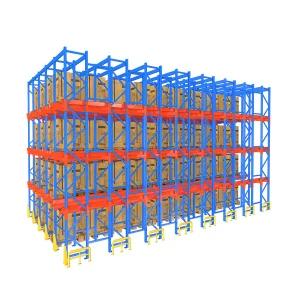
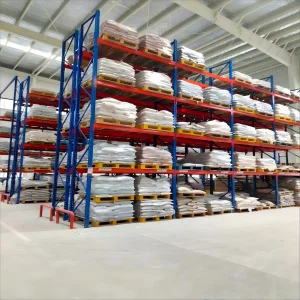
Engineered for maximum space utilization and extreme load bearing capacity in demanding warehouse environments.
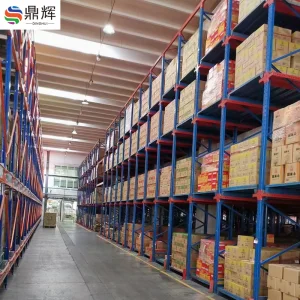
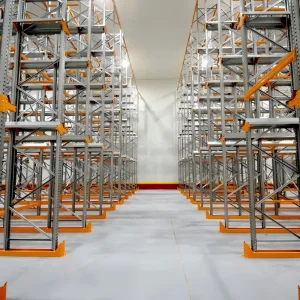
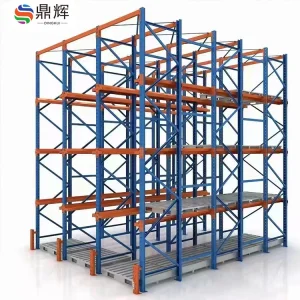
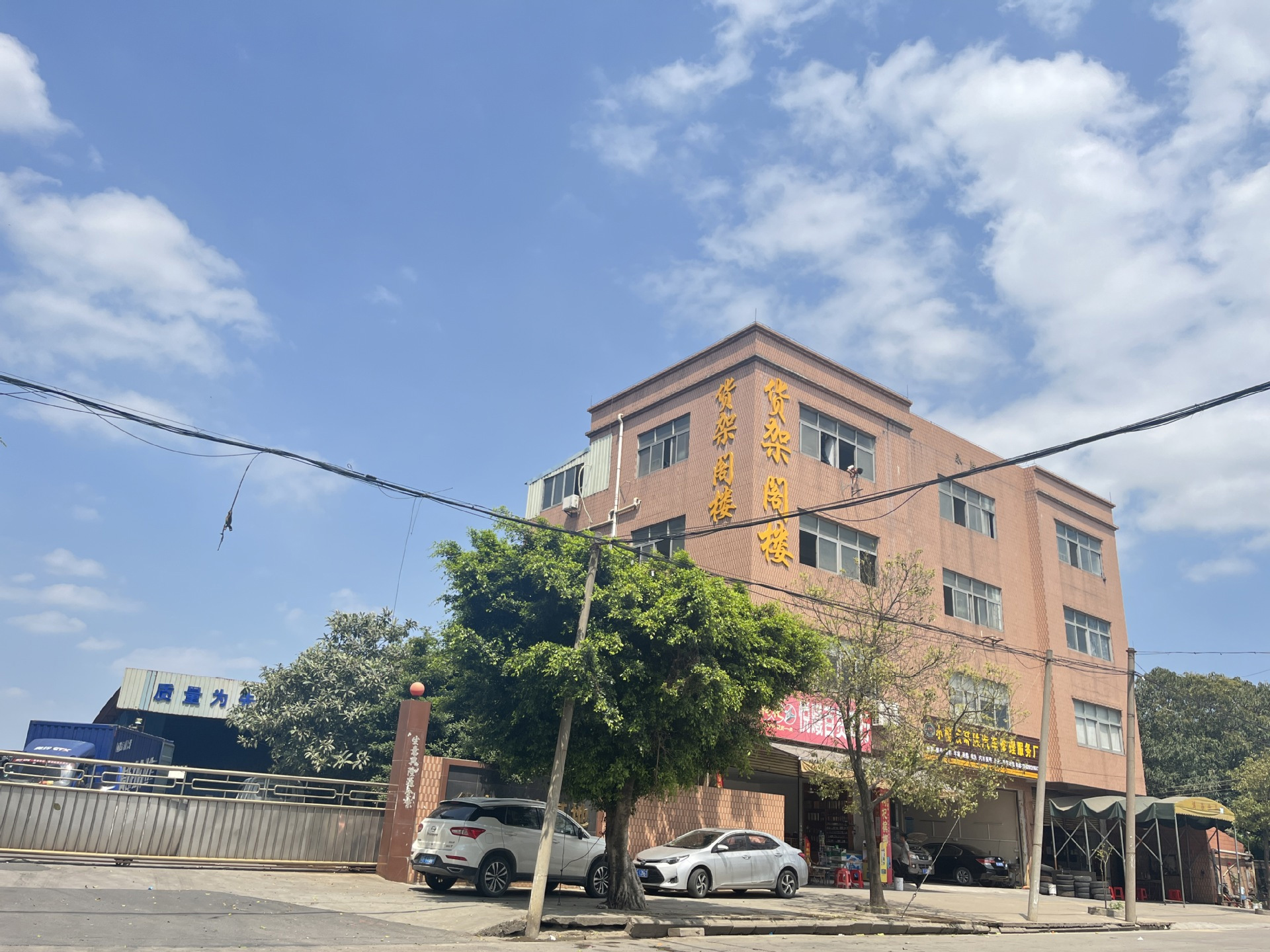
Foshan Dinghui Intelligent Warehousing Technology Co., Ltd. leads the engineering of durable high-density racking.
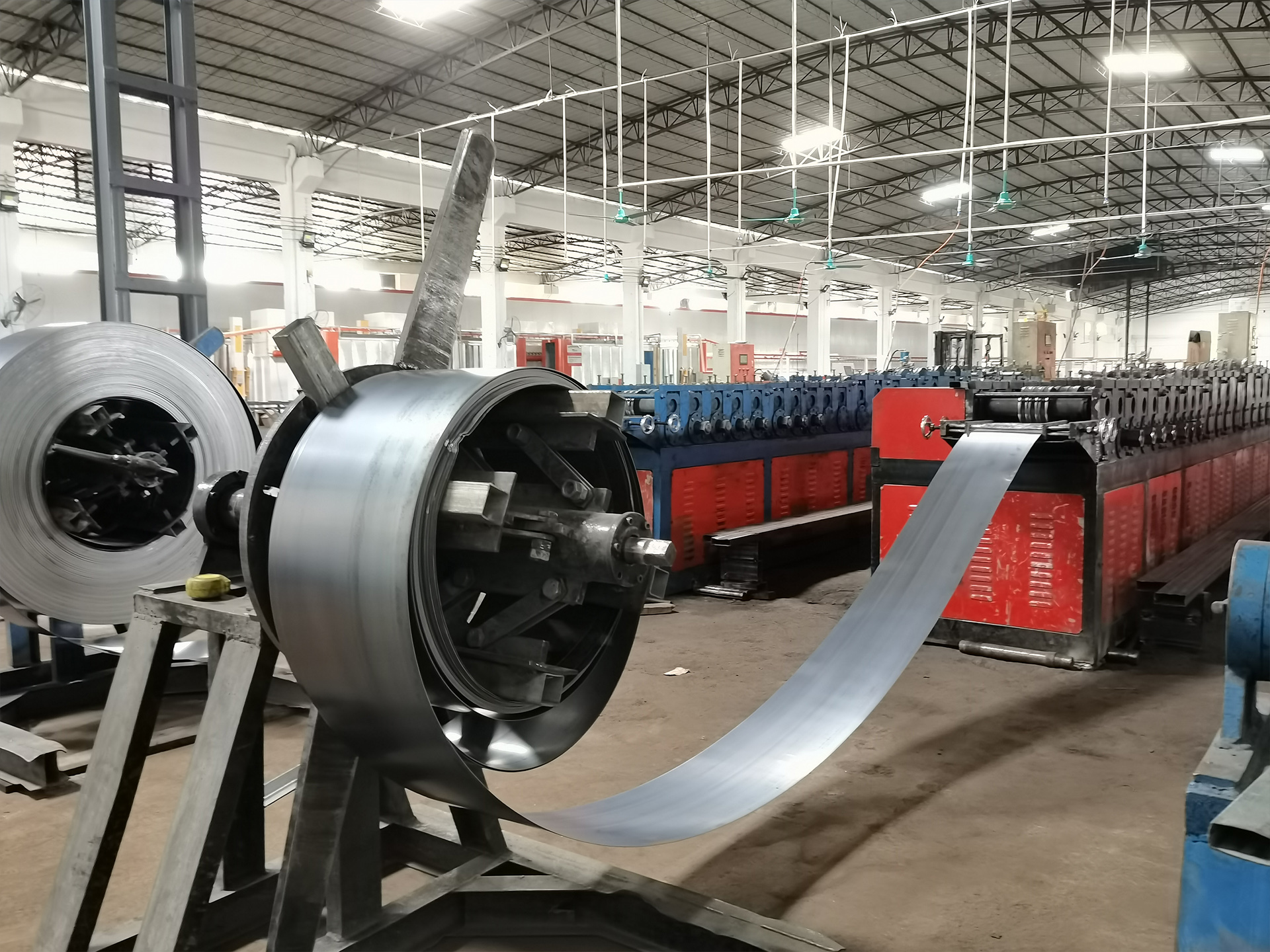
Established in 2015, Foshan Dinghui Intelligent Warehousing Technology Co., Ltd. has developed into a premier manufacturer of heavy-duty industrial storage racks, pallet racking systems, and integrated automated warehouse solutions. Our 38,000-square-meter facility implements highly automated, state-of-the-art production lines designed specifically for cold-rolled steel profiling, robotic welding, and electrostatic powder coating.
With over 12 years of industry experience and 8 years of direct global export expertise, we generate an annual export revenue exceeding $25 million USD. Our racking configurations comply with the most stringent industrial quality standards globally, including ISO 9001 and CE certifications.
Our dedicated QA/QC department of 35 specialist inspectors enforces strict protocols, including raw material tensile testing, structural load-bearing simulation, powder coating adhesion tests, and weld non-destructive inspection (NDI). Supported by 18 senior R&D engineers, we engineered 45 new product designs and structural upgrades last year alone, meeting the structural requirements of North America, Europe, Southeast Asia, and the Middle East.
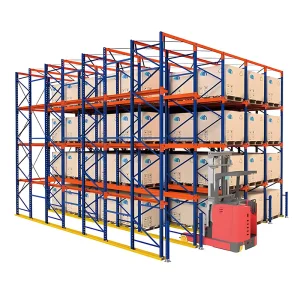
Maximizing floor space utilization by up to 75% compared to standard selective pallet racking systems.
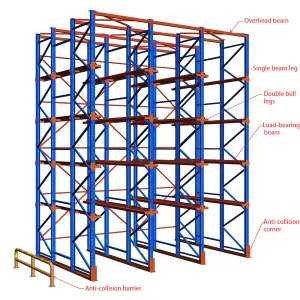
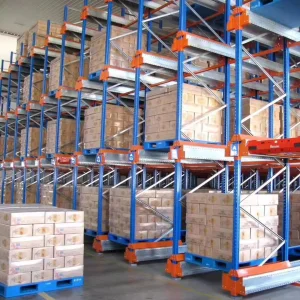
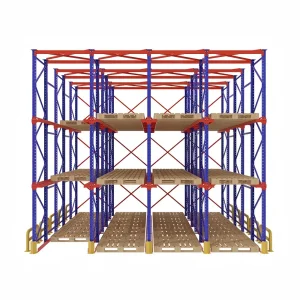
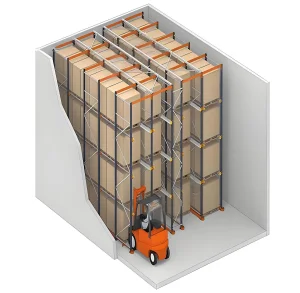
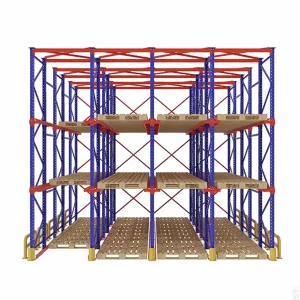
Drive-In racking functions on a Last-In, First-Out (LIFO) model, utilizing single-sided entry lanes. Through-Type (Drive-Through) systems enable First-In, First-Out (FIFO) retrieval via dual-sided entry lanes, perfect for high-velocity or date-sensitive inventory management.
Constructed utilizing high-strength Q355B structural steel, our upright frames undergo dynamic cold-roll forming. This increases yield strength and load carrying capabilities, maintaining stability under extreme load limits of up to 1,500kg per pallet position.
Each component undergoes a multi-stage chemical pretreatment bath, followed by the application of an electrostatic powder coating cured at 200°C. This ensures premium corrosion resistance, ideal for sub-zero cold-chain facilities operating down to -30°C.
"Through eliminating standard warehouse forklift aisles, Drive-In and Through-Type shelving consolidation increases active space utilization density from 40% to upwards of 75%-80%. By storing pallets up to 5 or 6 positions deep, logistics centers reduce total footprint requirements, making this the most cost-efficient storage method for cold chain, food production, and bulk commodity logistics."
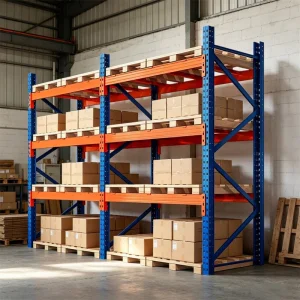
| Technical Characteristic | Standard Pallet Racking (Selective) | Drive-In Shelving (LIFO) | Through-Type Shelving (FIFO) |
|---|---|---|---|
| Storage Density Efficiency | Low (approx. 35% - 40%) | High (approx. 70% - 75%) | Very High (approx. 75% - 80%) |
| Pallet Access Priority | 100% Individual Selectivity | Last-In, First-Out (LIFO) | First-In, First-Out (FIFO) |
| Average Lane Depth | Single/Double Pallet depth | 4 to 8 Pallets deep | 4 to 12 Pallets deep |
| Structural Load Limit | Up to 4000 kg / beam level | 1000 - 1500 kg / pallet position | 1000 - 1500 kg / pallet position |
| Forklift Corridor Needs | Wide Aisles (3.0m - 3.8m) | Integrated Rail Corridors | Integrated Dual-Access Corridors |
| Seismic Application Suitability | Standard base plate design | Requires dynamic top-bracing | Requires structural portal bracing |
Navigating global regulatory landscapes is critical for procurement managers when selecting a industrial storage rack manufacturer. For major markets like North America, Europe, and Australia, structural engineering must comply with localized design codes:
Foshan Dinghui's engineering department partners with global testing bodies, employing finite element analysis (FEA) software to simulate seismic responses. This engineering verification ensures that our installations remain structurally secure in zones of high seismic activity, protecting both operators and inventory.
The global warehousing industry is undergoing rapid changes driven by rising real estate costs and the growth of e-commerce. High-density storage is evolving beyond traditional static structures:
Static drive-in racking is increasingly upgraded with radio shuttle carts. The shuttle automated system eliminates the need for forklifts to enter the racking lanes directly, significantly reducing structural damage risks and improving cycle times.
With global cold-chain infrastructure expanding, optimizing temperature-controlled zones is key. High-density drive-in racking systems optimize cooling retention by minimizing open volume, resulting in utility cost savings of up to 30%.
Seismic compliance is now mandatory in many procurement specifications. This requires heavier gauge steel, heavier top tie-beams, and robust diagonal back-bracing systems to withstand dynamic lateral forces.
Securing long-term operational durability and safety through strict material testing and welding audits.
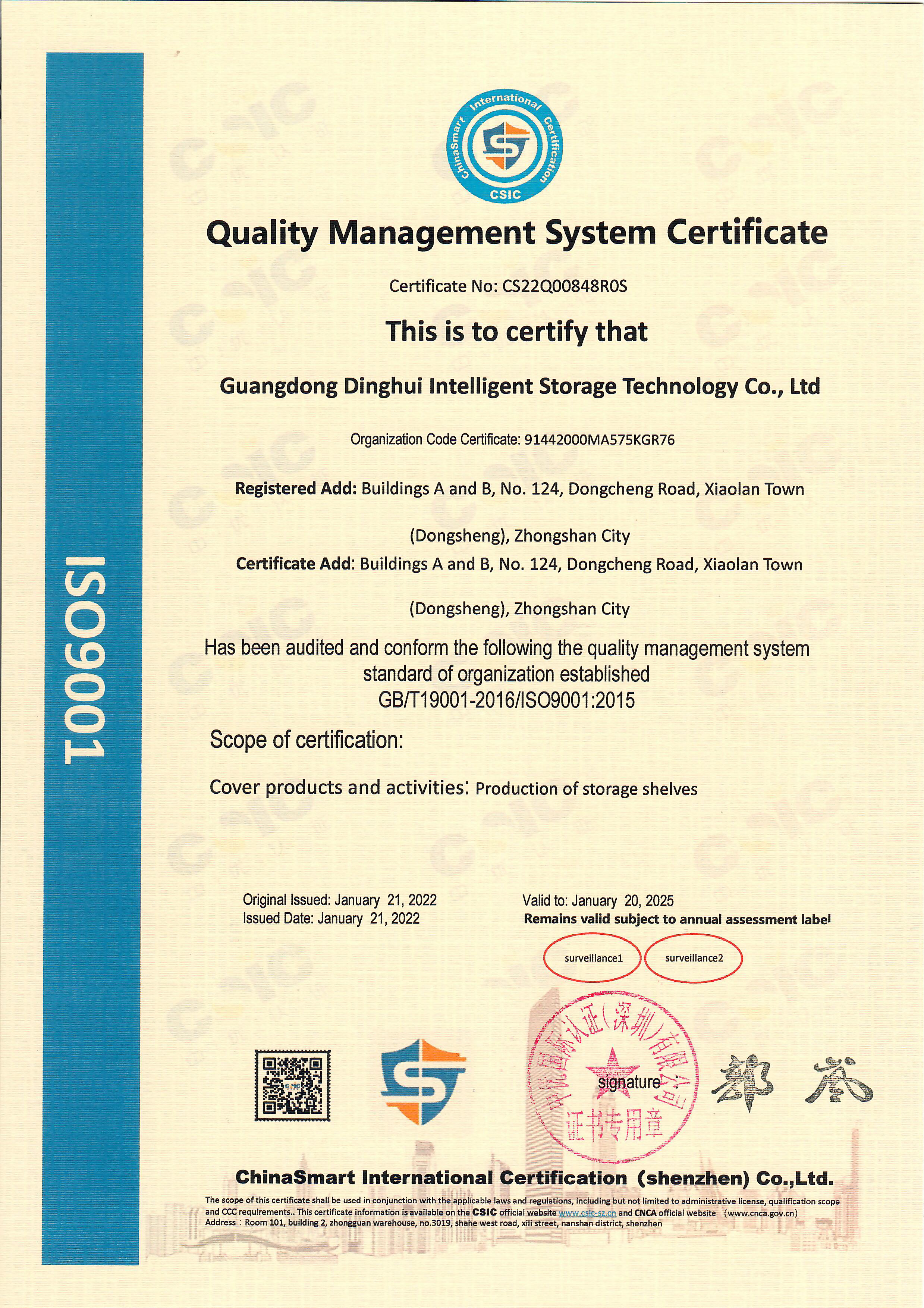
1. Raw Material: Verification of mill test certifications & steel yield.
2. Dimensional Analysis: CNC precision checks on roll profiles.
3. Welding Integrity: Regular NDI inspections.
4. Coating Performance: Cross-cut adhesion tests.
Our raw material testing begins with certified structural steel coil suppliers. Every batch undergoes chemical composition and tensile testing to confirm structural reliability. For the structural welds connecting bracket supports and rail arms to upright columns, we perform Non-Destructive Inspection (NDI) to prevent joint failures under prolonged shear stresses. Additionally, dry film thickness (DFT) checks ensure uniform powder-coat layers that protect components from moisture and chemical damage.
Answering critical engineering questions regarding heavy-duty drive-in storage racking installations.
Drive-In racking loads are supported by cantilevered rail support arms and horizontal pallet rails rather than traditional step beams. Because columns are not tied directly at the face of each bay, dynamic calculations are necessary to prevent frame deflection. Individual load limits typically range from 1,000kg to 1,500kg per pallet position, while selective racking can support up to 4,000kg per beam level due to its rigid box-beam construction.
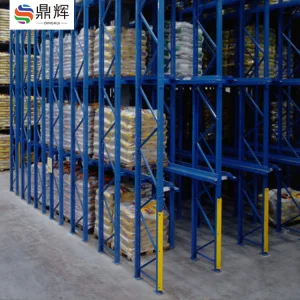
Forklift impact protection is critical in drive-in systems due to tight operator tolerances. Safety measures include heavy-duty floor-mounted guide rails (typically structural channel profiles), upright column protectors, and lead-in entry flares. Implementing these structures significantly reduces structural wear and increases overall system longevity.
Yes. Traditional static drive-in corridors can be engineered or retrofitted to house automated radio shuttles. The radio shuttle runs along the rails, placing and retrieving pallets independently. This transition to a semi-automated design removes forklift operations from within the racks, increasing cycle rates and virtually eliminating frame impact risks.
Cold storage configurations require corrosion-resistant surface coatings to withstand temperature swings and condensation. We apply a multi-stage phosphate conversion wash before electrostatic powder coating, curing panels at 200°C. Galvanized components are also available for environments with high humidity or chemical cleanings.
RMI (US) and FEM (Europe) guidelines define how lateral forces from earthquakes affect racking structures. Because drive-in configurations lack front bracing beams, lateral loads put high stress on connections. Compliance requires finite element analysis (FEA) to determine top bracing and back bracing needs, thicker base plates, and heavy-duty concrete anchor selections.
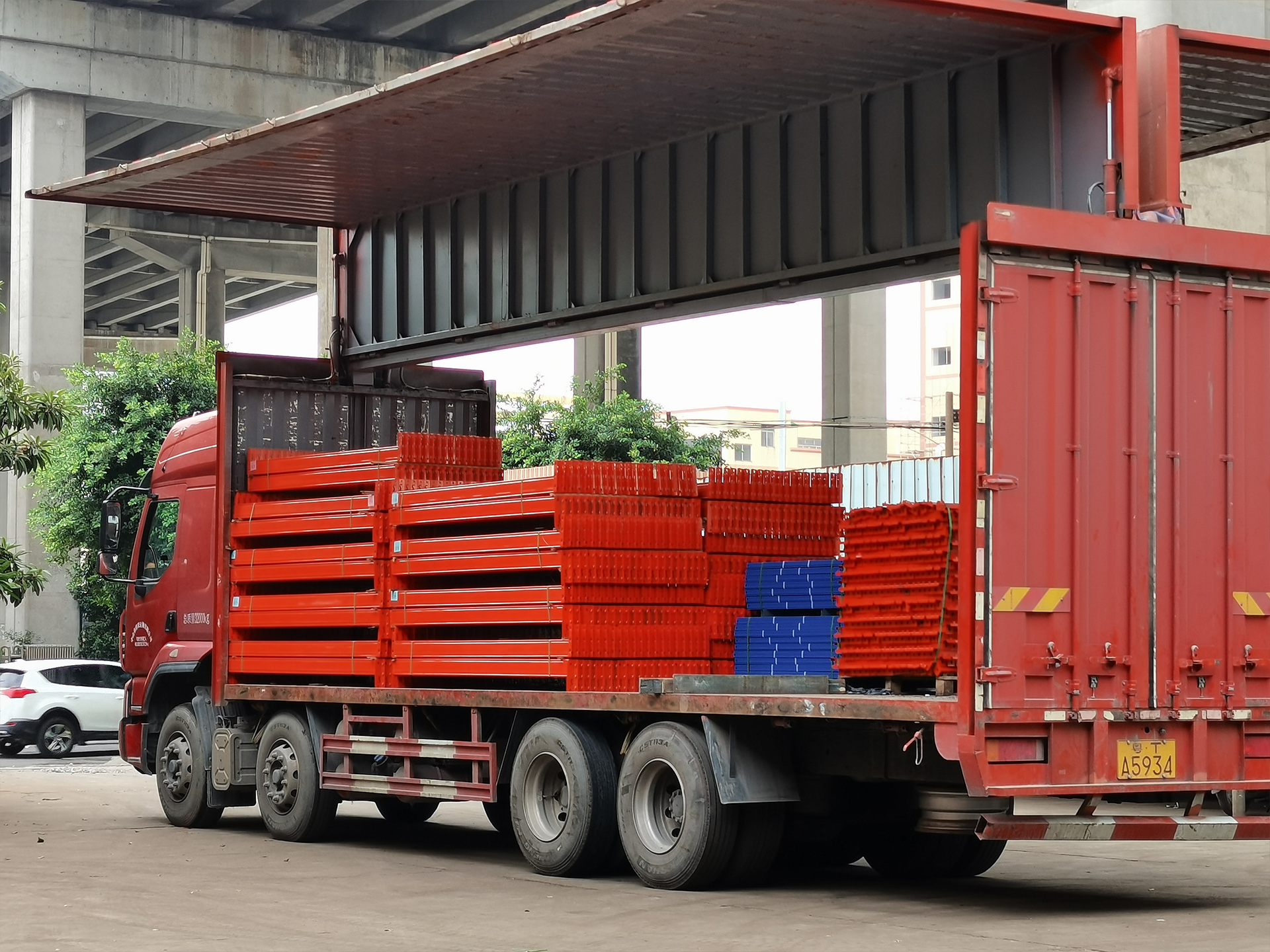
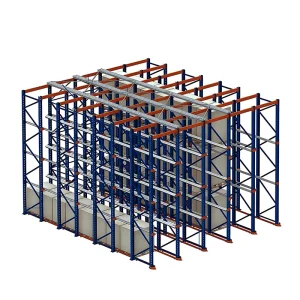
Browse our full range of heavy-duty, through-type, and customizable pallet storage designs.
 Dinghui Racking