Choosing Steel Containers in 2026 requires more than comparing prices and painted surfaces. The right container must match its cargo, location, handling method, and expected service life. A dry box for regional storage faces different demands than a refrigerated unit crossing oceans. Small details matter. Check the door seals. Inspect the corner castings. Measure the floor condition, not just the external length.
Edwin Basson, Director General of worldsteel, has emphasized, “Steel is the most recycled material in the world.” That principle supports a careful buying decision. Ask whether the container uses corrosion-resistant steel, certified welds, and recyclable components. Review its manufacturing standard, inspection records, payload rating, and repair history. For used units, examine rust around the roof seams, understructure, hinges, and locking bars. A fresh coat of paint can hide expensive damage.
Think beyond the first invoice. Transport costs, ventilation, security, insulation, and future modifications can change the total value. A container placed near salty air may need stronger corrosion protection. A unit used for machinery may require reinforced flooring and wider access. Temperature-sensitive goods demand verified insulation performance, not attractive marketing claims. No checklist is perfect. Conditions change. Supplier promises can also be incomplete.
This guide explains how to compare Steel Containers with clearer judgment in 2026. It considers durability, compliance, sustainability, customization, and lifecycle cost. The goal is not to find the cheapest box. It is to choose a dependable steel enclosure that performs safely, remains serviceable, and creates fewer surprises after delivery.
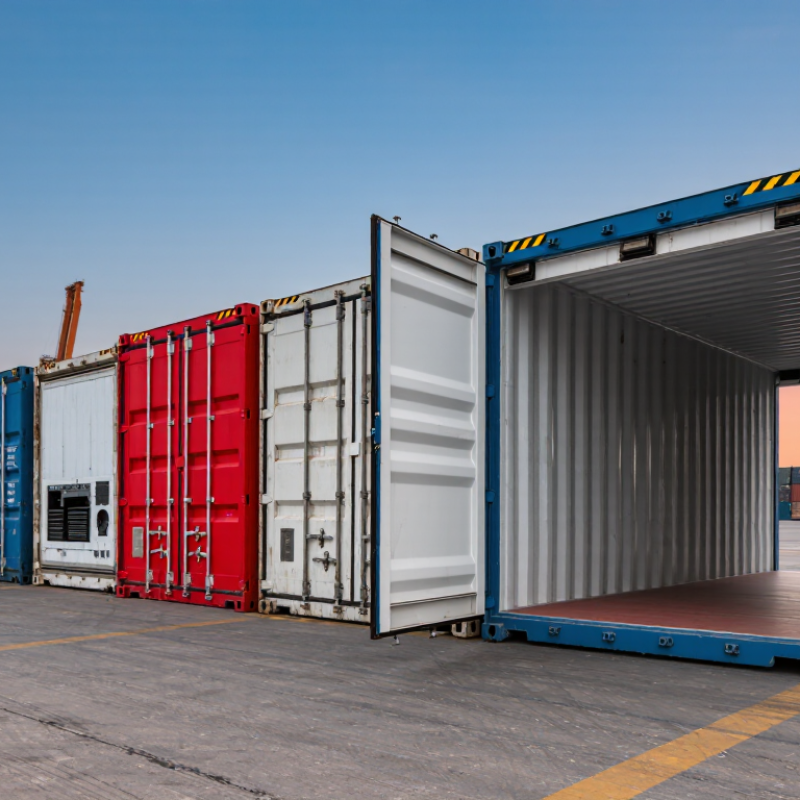
How to Choose Steel Containers in 2026?
Steel containers serve different purposes, so selection should begin with the application. Standard dry containers suit packaged goods, machinery, and warehouse storage. Their sealed doors protect cargo from rain and dust. High-cube models provide extra internal height for bulky equipment.
Insulated containers help maintain stable temperatures during short-distance distribution. Refrigerated units are better for temperature-sensitive food and approved medical supplies. Open-top containers support tall or irregular cargo loaded by crane. Tank containers are designed for permitted liquids and require strict compatibility checks. In practical inspections, corrosion around door frames often reveals neglected maintenance. A low purchase price can become expensive after repairs, repainting, or floor replacement.
Tips: Check payload, internal dimensions, floor strength, ventilation, and locking points before ordering. Confirm the steel grade and inspect welds for visible cracks. For outdoor storage, ask about protective coatings and drainage. Digital monitoring can record temperature, humidity, and door activity, but sensors still need calibration. Verify relevant transport and safety certifications with a qualified professional. Measure twice.
A container may look strong while hiding damage beneath flooring or corner fittings. Request recent inspection records, especially for used units. Think about handling equipment too; a suitable container can still fail operationally if forklifts cannot access it safely. Selection is not always perfect. Reassess after the first loading cycle.
Choosing a steel container in 2026 requires more than comparing price and wall thickness. The material must match its environment, contents, and expected service life. Carbon steel offers strength and value for dry, non-corrosive storage. However, it may rust quickly when exposed to rain, salt, or condensation.
Stainless steel grades deserve closer attention. Grade 304 suits many indoor and general-purpose applications. Grade 316L provides better resistance in coastal or chloride-rich environments. It usually costs more, but replacement costs can be higher. I have found that weld quality often matters as much as the grade itself. Poor welds can create weak points, even with excellent steel. No grade is perfect.
Protective coatings add another layer of defense. Hot-dip galvanizing works well for outdoor exposure and minor surface damage. Epoxy coatings provide strong chemical and moisture resistance when properly applied. Powder coatings offer a clean finish, but damaged areas need prompt repair. Surface preparation is critical. Dust, oil, and hidden corrosion can shorten coating life.
Tips
Ask for the steel grade, coating thickness, and test records. Inspect welds, drainage points, doors, and corners before purchase. Check whether the coating suits heat, sunlight, and humidity. Do not rely only on appearance. A smooth surface may still hide poor preparation. Confirm dimensions after coating, because internal space can change slightly. If the application is unusual, obtain advice from a qualified materials engineer. A careful decision now prevents an expensive lesson later.
| Container Component or Option | Typical Steel Material and Grade | Key Material Characteristics | Recommended Protective Coating System | Typical Coating or Treatment Details | Relative Corrosion Resistance | Advantages | Limitations | Best-Fit Applications |
|---|---|---|---|---|---|---|---|---|
| Weathering-steel side and roof panels | Weathering steel conforming to ASTM A606 Type 4 or equivalent low-alloy weathering grades | Forms a relatively stable protective oxide layer in alternating wet and dry conditions; commonly used for container panels and corrugated sheets. | Surface preparation plus epoxy or zinc-rich primer and a polyurethane or acrylic topcoat where long-term appearance and corrosion protection are required. | Coating thickness depends on the paint specification; a complete multi-coat system is commonly about 120–200 μm dry-film thickness. | High in suitable environments | Good strength-to-weight ratio, strong resistance to atmospheric weathering, and reduced dependence on heavy paint protection. | Protective patina may not stabilize in continuously wet, salty, or polluted conditions; runoff can stain adjacent surfaces. | General freight containers, outdoor storage, and moderate inland climates |
| Low-carbon steel structural frame | Structural carbon steel such as ASTM A36 or equivalent EN 10025 structural grades | Weldable and widely available; strength and toughness are suitable for frames, rails, doors, and general structural members when correctly designed. | Blast cleaning followed by zinc-rich primer, epoxy intermediate coat, and polyurethane or acrylic finish coat. | Zinc-rich primers commonly provide approximately 60–80 μm dry-film thickness; total systems vary by exposure category. | Moderate to high with a complete coating system | Cost-effective, easy to fabricate, and suitable for repairs and modifications. | Unprotected surfaces rust readily, especially at welds, edges, scratches, and water-trapping joints. | Frames, corner posts, door assemblies, and non-specialized container structures |
| High-strength low-alloy structural steel | HSLA grades such as ASTM A572 Grade 50 or equivalent high-strength structural grades | Higher yield strength than common structural carbon steel, allowing efficient designs when the required mechanical properties are verified. | Industrial blast cleaning followed by a zinc-rich primer and compatible epoxy or polyurethane topcoat. | Typical total dry-film thickness is approximately 120–200 μm, depending on the service environment and specification. | Moderate to high with coating | Higher strength can reduce structural weight or increase load capacity within design limits. | Welding procedures, heat input, and consumables require tighter control than for basic carbon steel. | Heavy-duty frames, reinforced containers, and high-load transport applications |
| Hot-dip galvanized steel panels or fittings | Low-carbon steel coated by hot-dip galvanizing in accordance with ISO 1461 or an equivalent specification | Zinc coating provides barrier protection and sacrificial cathodic protection at small scratches and exposed edges. | Unpainted galvanized finish for utility service, or a compatible duplex system consisting of galvanized steel plus primer and topcoat. | Coating mass and thickness depend on the steel thickness; requirements should be taken directly from ISO 1461 or the project specification. | High in many atmospheric environments | Durable, low-maintenance protection with useful protection around minor coating damage. | White rust can form during prolonged wet storage; welding and cutting locally remove zinc and require repair. | Utility containers, humid environments, floor supports, brackets, and replacement components |
| Zinc-coated steel sheet | Continuous hot-dip galvanized sheet, commonly specified by a zinc coating designation such as Z275 under EN 10346 | Factory-applied zinc coating offers consistent coverage and good formability for thin sheet components. | Galvanized finish, or a pre-treatment and paint system when improved appearance and additional barrier protection are needed. | Z275 corresponds to a nominal total zinc coating mass of 275 g/m² for both sides; actual thickness varies with zinc density and production tolerance. | Moderate to high | Consistent factory quality, good corrosion protection, and suitability for formed panels and small components. | Cut edges, drilled holes, and damaged areas need suitable zinc-rich repair treatment. | Interior liners, light-gauge panels, vents, doors, and accessories |
| Stainless-steel components | Austenitic stainless steel such as 304 or 316/316L | Chromium-based passive surface provides strong resistance to general corrosion; 316/316L contains molybdenum for improved chloride resistance compared with 304. | Usually used without a conventional paint coating; passivation, pickling, and proper cleaning may be specified after fabrication. | Surface finish and post-weld treatment are more important than paint thickness; weld discoloration should be removed for best corrosion performance. | Very high, especially 316/316L in chloride exposure | Long service life, clean appearance, and excellent resistance to moisture and many chemicals. | Higher material cost; galvanic corrosion can occur where stainless steel contacts carbon steel in the presence of an electrolyte. | Food, pharmaceutical, coastal, marine, and chemically demanding storage areas |
| Marine-grade aluminum panels | Aluminum alloys such as 5052 or 5083, used selectively rather than as the primary steel structure | Low density and good resistance to atmospheric corrosion; not a direct substitute for steel where high abrasion resistance or heavy structural loads are required. | Conversion coating, anodizing, or a compatible paint system; isolate from carbon steel to limit galvanic corrosion. | Conversion and anodized layers vary by process; paint compatibility and electrical isolation are essential at dissimilar-metal joints. | High in many atmospheric environments | Lightweight, corrosion-resistant, and useful for reducing panel or door weight. | Lower hardness than steel and potential galvanic interaction with untreated carbon steel. | Lightweight doors, interior panels, vents, and specialized container fittings |
| Epoxy primer and polyurethane topcoat | Coating system applied over prepared carbon, HSLA, or weathering steel | Epoxy provides strong adhesion and barrier protection; polyurethane generally improves UV and color retention. | Two- or three-coat system: primer, optional epoxy intermediate coat, and polyurethane finish. | Common total dry-film thickness is approximately 120–200 μm for outdoor service, subject to the selected exposure category. | High when correctly applied | Strong barrier performance, attractive finish, and broad color availability without relying on brand-specific products. | Requires thorough surface preparation; damage, poor edge coverage, and trapped moisture can initiate under-film corrosion. | General outdoor containers, urban environments, and long-term appearance-sensitive projects |
| Zinc-rich primer system | Carbon or low-alloy steel with an inorganic or organic zinc-rich primer | Provides sacrificial zinc protection in addition to barrier protection when sufficient electrical continuity and coating thickness are achieved. | Zinc-rich primer covered by a compatible epoxy intermediate coat and UV-resistant topcoat. | Primer is commonly specified around 60–80 μm dry-film thickness, with the complete system often approximately 150–250 μm. | Very high with compatible overcoats | Strong protection for blasted steel and improved performance at minor coating defects. | Requires clean, properly profiled steel and strict control of application conditions; incompatible overcoats may blister or peel. | Coastal, industrial, high-humidity, and heavy-duty outdoor service |
| Internal floor protection | Marine plywood or engineered wood floor supported by painted or galvanized steel cross-members | Floor performance depends on moisture resistance, panel thickness, support spacing, and protection from standing water and chemicals. | Coated steel supports plus sealed floor edges; optional wear-resistant or chemical-resistant floor coating. | Coating thickness should follow the selected floor coating specification; all joints and penetrations should be sealed against water ingress. | Moderate to high when kept dry | Improves durability, load distribution, and resistance to abrasion from forklifts and cargo. | Water trapped below the floor can corrode steel supports and degrade wood-based panels. | Cargo containers, warehouse storage units, and frequent forklift loading |
Choosing a steel container starts with the load, not the available yard space. ISO 668:2020 lists common external lengths of 6.06 metres and 12.19 metres. A standard container may have a maximum gross mass of 30,480 kilograms. That figure includes the container itself.
Calculate payload carefully. Subtract the tare weight from the permitted gross mass. For example, a 20-foot unit weighing 2,300 kilograms may carry about 28,180 kilograms theoretically. Real operations require a safety margin. Check the CSC safety plate before loading. It records the approved gross mass, tare, and stacking limits. Do not rely only on supplier listings.
Shape also matters. Tall machinery may need internal clearance, while dense metal parts can exceed floor limits quickly. The IMO/ILO/UNECE CTU Code recommends distributing cargo evenly and securing it against movement. Keep heavy items low and near the centre. A 12.19-metre container is not automatically better. It can leave unused volume while adding handling cost. That mistake is common.
Measure the largest item, including packaging, lifting clearance, and door access. Then compare volume and weight separately. Leave room for bracing and inspection. UNCTAD’s Review of Maritime Transport 2024 highlights continuing pressure for efficient cargo handling, but efficiency cannot replace verified calculations. I would recheck every figure against the actual container plate. Specifications can vary.
Compare typical internal volume and payload capacity before selecting a steel container. The figures below represent common ISO dry-container ranges; always verify the container data plate, local regulations, and cargo weight distribution before loading.
How to Choose Steel Containers in 2026?
Safety begins with traceable evidence, not a polished surface. Check the CSC safety approval plate, ISO 1496 dimensions, rated capacity, and inspection history. Welds should show consistent penetration, without visible cracks or porous repairs. Door gaskets must compress evenly. Small gaps can admit rain, dust, or pests.
For regulated supply chains, request documented load tests, material certificates, and maintenance records. The International Maritime Organization’s Container Safety Convention requires periodic examinations and structural safety controls. Local transport rules may add labeling, inspection, or handling requirements. Confirm these before purchase. A container can meet one standard and still fail another route’s requirements. That detail is often missed.
Environmental performance deserves equal attention. World Steel Association data reported about 1.89 billion tonnes of crude steel production in 2023. The International Energy Agency estimates steelmaking creates roughly 7–9% of global energy-related CO2 emissions. Ask for recycled steel content, coating composition, repairability, and an environmental product declaration when available. Life-cycle data is more useful than vague “green” claims. Reusing a sound container may reduce replacement demand, but transport distance can weaken that benefit. I would also question unusually low prices; hidden corrosion and repeated repairs may create a larger footprint. Safety records should remain the deciding evidence.
In 2026, steel-container selection should begin with total cost of ownership, not sticker price. A low-cost unit may hide warped doors, thin coatings, or difficult repairs. UNCTAD’s Review of Maritime Transport 2024 recorded about 858 million TEUs handled worldwide in 2023. That scale shows how often containers face lifting, stacking, salt air, and impact. For repeated movement, inspect corner castings, weld seams, floor supports, door alignment, and corrosion under the frame. ISO 1496-1 provides testing requirements for general-purpose freight containers. Ask for test records, material grades, repair history, and a clear load rating.
Documentation matters. Durability creates value only when maintenance remains predictable. The World Steel Association links steel recycling with major resource savings. Recycling one tonne can save roughly 1.4 tonnes of iron ore and up to 1.5 tonnes of carbon dioxide emissions. That supports steel’s long-term resource value, but recycling does not erase transport, coating, or labor costs. Compare five-year costs, including delivery, inspections, repainting, floor replacement, and downtime. In humid sites, a better coating may cost more upfront and prevent expensive corrosion. Yet thicker steel is not automatically better. It may increase handling weight and freight charges. This is where buyers sometimes over-specify. I would rather fund sound welds and drainage than unnecessary mass.
Tips: Test a sample unit outdoors for 30 days, when conditions allow. Photograph rust, water pooling, and door gaps after rain. Request three repair estimates, not one. Score durability, annual maintenance, and resale potential separately. If your calculation assumes perfect weather and zero downtime, it is probably optimistic.
Standard dry containers protect cargo from rain and dust. They work well for packaged goods, machinery, and warehouse storage. A high-cube model adds internal height for bulky equipment. Measure the cargo first.
Insulated containers help stabilize temperatures during short-distance distribution. Refrigerated units suit temperature-sensitive food and approved supplies. Check the required temperature range before ordering. Sensors help, but calibration can be forgotten.
Open-top containers allow crane loading for tall or irregular items. Measure lifting clearance and door access carefully. Leave space for bracing and inspection. The largest container is not always the best choice.
Subtract the tare weight from the permitted gross mass. For example, 30,480 kilograms minus 2,300 kilograms equals 28,180 kilograms theoretically. Use a safety margin in real operations. Check the container’s safety plate, not only online specifications.
Distribute weight evenly across the floor. Keep dense items low and near the centre. Secure every item against movement during handling. Leave room for bracing. A heavy load can exceed floor limits quickly.
Check door frames, welds, corner fittings, floor supports, and drainage. Look beneath the flooring when possible. Corrosion around door frames often signals neglected maintenance. Request recent inspection records and repair history. It may look strong. Inspect anyway.
Not necessarily. Repairing warped doors, damaged floors, or weak coatings can cost more later. Compare delivery, inspections, repainting, repairs, and downtime over five years. A stronger coating may suit humid outdoor storage. Thicker steel is not automatically better.
Check forklift access, lifting points, internal dimensions, and locking locations. A suitable container can still fail operationally if equipment cannot reach it safely. Confirm load ratings and safety certifications with a qualified professional. Reassess the choice after the first loading cycle. The first plan may be wrong.
Choosing the right Steel Containers in 2026 requires more than comparing prices. Start by identifying the container type that fits the intended application, such as storage, transportation, industrial handling, or specialized environmental protection. Then review the material grade, structural design, and protective coating, since these factors affect resistance to corrosion, impact, moisture, and temperature changes. Size and load capacity should be selected according to the goods, stacking method, handling equipment, and available space, while leaving sufficient safety margins.
A reliable evaluation should also cover ventilation, locking systems, inspection access, labeling, and relevant safety and environmental requirements. Consider whether the container can be repaired, reused, recycled, or adapted as operating needs change. Although a lower purchase price may seem attractive, durability, maintenance costs, service life, transport efficiency, and potential downtime have a greater effect on long-term value. A well-chosen container should provide safe performance, practical flexibility, and predictable costs throughout its working life.

Dinghui Racking