In a busy warehouse, every extra aisle consumes floor space that could hold inventory. Narrow Aisle Storage addresses this pressure by reducing travel lanes and using vertical height more effectively. Instead of relying on standard forklifts, many systems use turret trucks, reach trucks, or guided vehicles. These machines move pallets through tighter corridors, often with carefully controlled turning space. The result can be more storage locations without expanding the building.
The system works through a planned relationship between rack design, equipment, and operating rules. Engineers measure pallet dimensions, load weights, ceiling height, floor quality, and truck specifications before selecting a layout. Rails, wire guidance, or camera systems may help equipment stay aligned. Operators then retrieve pallets from high bays while maintaining clearances around beams and loads. Small errors matter here. A damaged pallet can affect an entire aisle.
This approach suits distribution centers with high inventory density and predictable pallet movements. It may also reduce walking and forklift travel, but the gains are not automatic. Specialized trucks cost more, require trained operators, and may slow work when product access changes frequently. That assumption can fail. A credible design therefore compares storage capacity, throughput, maintenance, emergency access, and safety needs. Real results depend on disciplined inspections and accurate inventory data. The best solution is not always the narrowest aisle. It is the layout that supports reliable daily work.
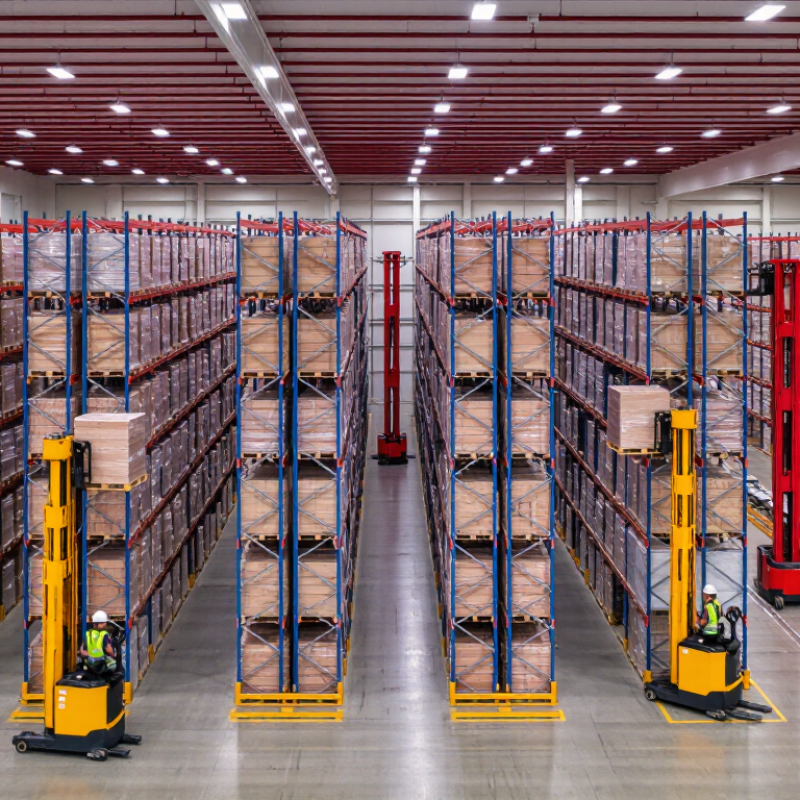
Definition and Purpose of Narrow Aisle Storage
Narrow aisle storage is a warehouse layout that places pallet racks closer together than conventional systems. It reduces unused floor space and increases available storage positions within the same building. Aisles may be only wide enough for specialized lifting equipment to enter, turn, and retrieve pallets safely. The exact width depends on rack height, pallet dimensions, equipment design, and local operating rules.
Its purpose is practical: store more goods without expanding the facility. This approach can support higher inventory levels, clearer location control, and shorter travel paths for selected products. However, narrow aisles do not automatically improve every warehouse. Fast-moving goods may need wider access or dedicated picking areas. Slow-moving pallets can often use higher rack positions, while frequently handled items should remain within comfortable reach.
Good planning begins with accurate measurements. Teams should check floor flatness, rack alignment, turning clearances, emergency routes, and lighting. Small errors matter. A few centimeters can affect safe equipment movement. Operators also need suitable training and consistent speed controls. In daily work, blocked aisles, damaged pallets, or poorly labeled locations can reduce the expected benefit. The layout is efficient, but not perfect. Regular inspections reveal whether the design still matches real warehouse behavior.
How Narrow Aisle Layouts Differ from Standard Warehouse Designs
Narrow aisle storage uses slimmer travel lanes than a standard warehouse layout. Standard aisles often allow comfortable two-way movement for conventional forklifts. Narrow aisle designs reduce that clearance, sometimes to less than two meters. The saved floor space creates room for additional pallet positions without expanding the building.
The operating method also changes. In a standard layout, a forklift can usually approach a pallet, turn, and leave with few restrictions. In a narrow aisle, the truck may need guided travel, tighter steering, or a rotating mast. Operators must align carefully with each rack location. A small steering error can damage a pallet, rack upright, or nearby goods. Clear floor markings and controlled travel speeds become practical necessities.
This layout can improve storage density, but it does not automatically improve warehouse performance. Travel distance may decrease, while picking and replenishment require more planning. Aisle width should match pallet dimensions, load weights, turning behavior, and equipment specifications. I have seen space studies look impressive on paper, yet fail when battery charging areas and emergency access are ignored. That is a costly oversight. Regular rack inspections, operator training, and accurate inventory locations support safer daily work. A narrow aisle plan also deserves testing during peak activity, when several forklifts compete for limited movement space. Real operations are less tidy than drawings suggest.
What Is Narrow Aisle Storage and How Does It Work?
Narrow aisle layouts reduce the space required for forklift travel, allowing more rack positions within the same warehouse footprint than a standard wide-aisle design.
The aisle-width values use the midpoint of commonly specified planning ranges: approximately 10–12 ft for standard aisles and 8–9 ft for narrow aisles. The storage-capacity index is a normalized planning model, with standard wide-aisle storage set to 100; actual results depend on rack height, pallet dimensions, equipment, fire-code requirements, and building geometry.
Equipment Used to Access and Handle Stored Goods
What Is Narrow Aisle Storage and How Does It Work?
Narrow aisle storage uses compact rack layouts and specialized equipment to reduce wasted floor space. The main challenge is access. Standard counterbalance forklifts often need more turning room. Instead, warehouses use reach trucks, very-narrow-aisle turret trucks, order pickers, and guided vehicles.
Reach trucks extend their forks into deep pallet positions while keeping the chassis outside the rack. Turret trucks rotate forks sideways and can work at considerable heights. Order pickers lift operators to selected carton levels, which supports piece picking. Guided vehicles can move pallets along programmed routes, but they still need accurate locations and clear travel paths. Small errors spread.
MHI’s 2024 Annual Industry Report found that 83% of supply chain leaders planned to increase technology investment. That supports wider use of automation, but equipment selection should follow operating data, not fashion. OSHA reports approximately 35,000 serious forklift injuries and 85 fatalities annually in the United States. Training, visibility, and speed control remain essential.
Tips: Measure the actual load, aisle width, rack height, and turning clearance before purchasing equipment. Check floor flatness and battery-charging capacity. A layout can look efficient on paper but feel cramped during peak picking. No model is perfect. Review near misses, travel time, and damaged pallets every month, then adjust the system.
Step-by-Step Storage and Retrieval Process
What Is Narrow Aisle Storage and How Does It Work?
Step-by-Step Storage and Retrieval Process
Narrow aisle storage places pallet racks closer together than conventional layouts. This design creates more usable floor capacity without expanding the building. It requires suitable lifting equipment and carefully controlled movement. Safety remains essential.
The process begins when goods arrive at the receiving area. Staff inspect packaging, count units, and confirm product information. A warehouse management system then assigns an open rack location. The operator checks the aisle, rack level, and pallet condition before moving. The load travels slowly into the aisle. Forks enter the pallet openings evenly. The pallet is raised, aligned, and placed on the beams. The operator reverses only after confirming full clearance.
Retrieval follows a similar sequence. A worker receives a digital task and verifies the storage address. The lifting equipment enters the narrow aisle with limited turning space. The operator positions the forks beneath the pallet and lifts it steadily. The pallet is moved to a staging area for counting, inspection, or dispatch. Every movement should be recorded immediately. Delayed updates create inventory errors.
In a working warehouse, the sequence does not always remain neat. A damaged pallet, blocked location, or unreadable label can interrupt the task. That is where judgment matters. Workers should pause, report the issue, and avoid forcing the load. Small errors spread quickly. Regular aisle checks and equipment training help, although they cannot replace careful attention.
Benefits, Limitations, and Planning Considerations
Narrow aisle storage reduces travel space between rack rows, typically from 10–12 feet to about 8–10 feet. Very narrow aisle systems can require less than 7 feet. This creates more pallet positions without expanding the building. However, density is not free. Specialized forklifts, guided travel, and stronger operator training may increase capital and maintenance costs. MHI’s 2024 Annual Industry Report found that 55% of supply chain leaders planned to increase investment in innovation, showing why these systems attract attention.
The main benefit is better space utilization. Yet narrow aisles can restrict two-way traffic and complicate emergency access. High-turnover products may suffer if replenishment becomes slower. Floor flatness also matters, especially with tall racks and guided equipment. OSHA 1910.176(b) requires stored materials to remain stable and secure, so rack design, load ratings, inspections, and clearances need documented control. A plan can still fail. Poor slotting often cancels the expected gain.
Tips:
Measure actual pallet dimensions, not catalog sizes. Map daily picks by SKU velocity. Test the tightest turning path with the intended truck. Keep pedestrian routes visibly separated. Review fire protection and local building requirements before installation. Leave adjustment space for future inventory changes; forecasts are rarely perfect. A small pilot aisle can expose bottlenecks before a full conversion.
Conclusion
Narrow Aisle Storage is a warehouse design strategy that reduces the space between storage racks, allowing more goods to be stored within the same building footprint. Unlike standard warehouse layouts, which provide wider travel lanes for general-purpose vehicles, narrow aisle systems prioritize vertical space and carefully planned rack placement. This approach can increase storage density while keeping inventory organized and accessible.
Goods are typically stored and retrieved with specialized equipment designed to operate safely in restricted aisles and reach elevated rack levels. The process involves positioning the equipment, selecting or placing the required load, confirming its location, and updating inventory records. Narrow Aisle Storage can improve space utilization, reduce unnecessary travel, and support better inventory control. However, it may require higher planning accuracy, trained operators, suitable floor conditions, and equipment designed for the available aisle width. Before implementation, businesses should evaluate product dimensions, turnover rates, building height, safety procedures, and future capacity needs.

 Dinghui Racking