China’s Push-Back Storage industry serves warehouses that need high-density pallet storage without sacrificing loading speed. This guide introduces ten notable manufacturers and explains how their systems perform in practical warehouse conditions. The focus is not only on product catalogs. It also considers engineering experience, manufacturing capability, safety controls, customization, and after-sales support.
A reliable comparison should examine rack profiles, trolley design, upright strength, pallet compatibility, and operating clearances. Factory audits, load-testing records, technical drawings, and customer references can reveal more than polished marketing photographs. Installation quality matters too. A strong rack can perform poorly when anchoring, leveling, or pallet placement is handled carelessly. Site measurements, forklift type, aisle width, and storage temperature should guide every recommendation.
The ranking is not absolute. Some manufacturers excel in export coordination, while others offer stronger customization or faster domestic service. That difference deserves attention. Pricing alone can hide important costs, including installation, spare parts, inspection, and future expansion. This article therefore presents a practical starting point for buyers, consultants, and warehouse operators evaluating Chinese suppliers. It encourages readers to verify certifications, production capacity, warranty terms, and real project experience before signing a contract. Even experienced buyers can miss small details, such as beam deflection limits or uneven floor conditions. Careful comparison remains essential.
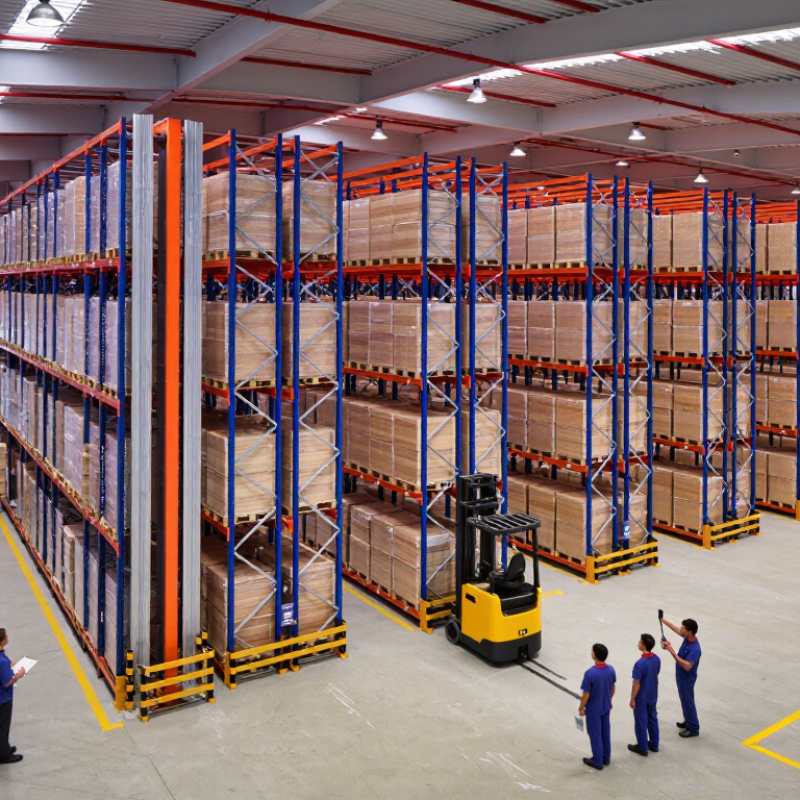
Push back storage is a pallet racking system designed for high-density storage. It uses nested carts or sliding platforms on inclined rails. A forklift loads pallets from one aisle, pushing earlier pallets toward the rear. Gravity then moves the stored pallets forward when space becomes available.
This system usually follows the last-in, first-out method. The newest pallet enters first and leaves first. That makes it suitable for products without strict expiration rotation, such as packaged materials, spare parts, and seasonal inventory. Each lane can hold several pallets, reducing empty aisle space. In practical warehouse work, operators appreciate faster loading because every lane is accessed from one side.
Installation requires careful planning. Rail strength, pallet weight, forklift reach, and floor conditions must match the design. Pallets should also have consistent dimensions and stable loads. A poorly balanced pallet may stop on the rail or create a handling risk. Regular inspections should check carts, rollers, stops, and frame connections.
The system is not perfect.
Some warehouses need first-in, first-out control. Push back storage may then create operational limits. In my experience, the best layout depends on inventory turnover, product shape, and daily picking habits. A supplier’s technical drawings and load tests should be reviewed before purchasing. Clear training matters too, because small loading mistakes can reduce both capacity and safety.
The table below summarizes common push-back pallet-racking specifications and operating principles. Values are typical planning ranges rather than quotations for a specific supplier, because final capacity depends on pallet dimensions, load characteristics, seismic requirements, building height, handling equipment, and local safety standards.
| Data Dimension | Typical Value or Range | How Push-Back Storage Works | Practical Design Consideration |
|---|---|---|---|
| Storage Principle | Last-In, First-Out (LIFO) | Each new pallet is loaded from the aisle and pushes previously stored pallets deeper into the lane. | Best suited to inventory with relatively low product variety and longer storage cycles. |
| Typical Pallet Depth | 2 to 6 pallets deep per lane | Nested carts or inclined rollers allow pallets to move within the same storage lane. | Greater depth improves density but reduces direct access to individual pallets. |
| Common Pallet Load | Approximately 500 to 1,500 kg per pallet | The rack structure, carts, rails, and beams transfer the load to the upright frames and floor. | Actual rated capacity must be verified through engineering calculations and load testing. |
| Pallet Positions per Lane | Usually 2 to 6 positions | Forklift operators place pallets on moving carts or rollers, allowing the stored units to queue automatically. | Lane length should match pallet dimensions, clearances, product turnover, and handling equipment. |
| Operating Direction | Single-sided or back-to-back layout | Single-sided racks are loaded from one aisle; back-to-back arrangements increase storage density. | Back-to-back installations require proper flue spaces, row spacers, anchoring, and fire-protection review. |
| Rack Height | Commonly 3 to 10 m, subject to site conditions | Multiple vertical pallet levels use the building height more efficiently than floor stacking. | Clear height, sprinkler coverage, seismic conditions, and forklift lift height determine the practical limit. |
| Forklift Requirement | Reach truck, counterbalance forklift, or comparable equipment | The forklift deposits or retrieves pallets while the carts or rollers control movement inside the lane. | Equipment selection must consider aisle width, maximum lift height, turning radius, and pallet weight. |
| Typical Aisle Width | Approximately 2.7 to 4.0 m, depending on truck type | Push-back racks reduce the number of operating aisles compared with selective pallet racks. | Final aisle dimensions must follow the forklift manufacturer's operating requirements and site regulations. |
| Storage Density Benefit | Often higher than selective racking for homogeneous inventory | Shared deep lanes and fewer access aisles increase the number of pallet positions within the same footprint. | Density gains may be offset if many different SKUs require individual pallet access. |
| Suitable Inventory Profile | Multiple pallets per SKU with medium to high turnover | Each lane can store one product or batch, reducing unnecessary pallet movement during loading and unloading. | FIFO-sensitive goods, highly mixed SKUs, and products with strict expiration control may require another system. |
Its supply chain is highly complete. Steel processors, roller suppliers, welders, and coating facilities often operate nearby. This reduces transport time and simplifies design changes.
Many factories use laser cutting, robotic welding, and powder coating lines. These methods improve accuracy and surface protection. Details matter here.
Request material certificates, weld inspection records, and load testing reports. Confirm the capacity for each beam level. Do not rely only on the total bay rating.
Ask for recent project references, factory photographs, and production records. A sample drawing can reveal important dimensions. A polished website proves little.
Rack depth should match pallet dimensions and forklift clearance. Engineers should also review warehouse height, aisle width, and turnover patterns. Small errors can obstruct loading.
Compare at least three written quotations with identical specifications. Check steel thickness, cart strength, testing scope, packaging, and delivery terms. Cheap is not always cheap.
Watch steel forming, welding, inspection, packing, and labeling. Look for consistent processes. One quiet visit is not complete evidence, though.
Discuss installation help, spare parts, warranty limits, maintenance instructions, and response times. Ask warehouse staff to review maintenance procedures. This step is often missed.
Ask a technical question about pallet loads or aisle clearance. Clear answers usually include measurements and calculations. Vague replies deserve a pause.
Focusing too heavily on the initial price. Delivery delays, replacement parts, and redesigns can increase the final cost. I have made that mistake too.
This guide explores how Push-Back Storage systems improve warehouse capacity, accessibility, and operational efficiency. It explains the basic working principle: pallets are loaded onto nested carts or inclined rails, allowing newly stored pallets to push earlier ones toward the back while gravity supports controlled movement during retrieval. The article also examines why China has become a major manufacturing hub, including its broad industrial supply chain, engineering capabilities, production flexibility, and competitive pricing.
Readers will learn how to evaluate China’s top 10 Push-Back Storage manufacturers by reviewing product quality, structural design, load capacity, safety features, manufacturing standards, delivery performance, and after-sales support. The guide also covers key technologies, available configurations, automation compatibility, and customization services for different warehouse layouts and storage requirements. Finally, it provides practical advice for selecting the right manufacturer by comparing technical expertise, quality control, communication, project experience, warranty terms, and total ownership costs.

 Dinghui Racking