China Top 10 Wire Shelving Manufacturers

Time:2026-11-17 Author:Ethan
0%

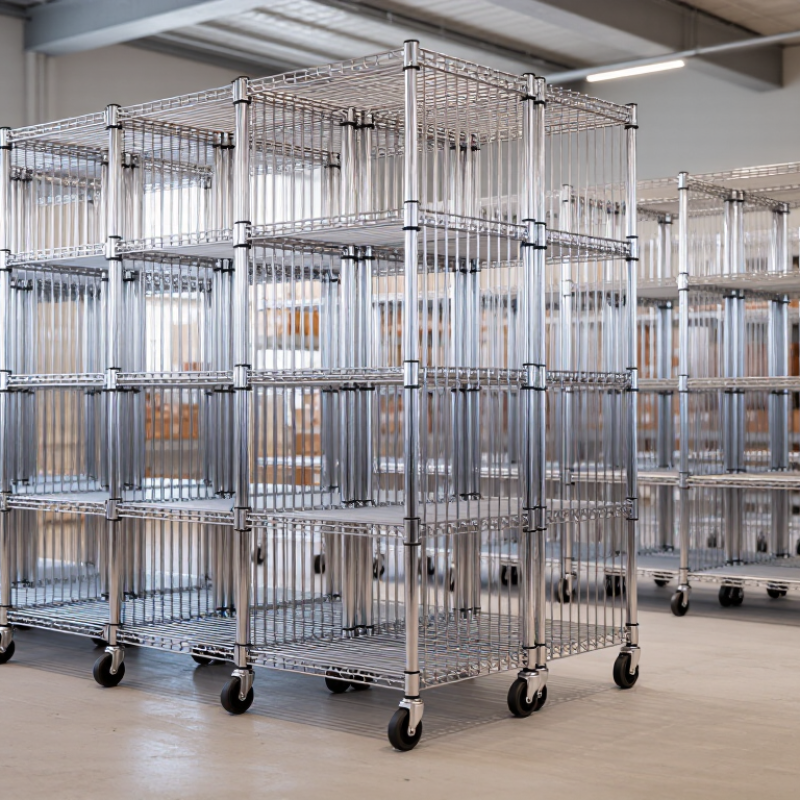
China has a broad manufacturing base for storage equipment, including Wire Shelving used in kitchens, stockrooms, workshops, and retail spaces. This guide introduces ten manufacturers for buyers comparing product ranges and supplier capabilities. A coated wire shelf may look simple, but its finish, frame thickness, and spacing affect how it performs in daily use. Small details matter.

The companies are considered through practical factors: available shelf sizes, stated load capacities, material and finish options, customization services, and export experience. Buyers should also check whether product specifications are clearly documented and whether samples or inspection reports can be provided. Casters, leveling feet, and post designs deserve attention, too. They influence stability and ease of movement, especially on uneven floors or in busy storage areas.

A manufacturer’s catalog can be useful, but it rarely answers every question. Capacity figures may depend on evenly distributed loads, and surface finishes can vary between product lines. Ask for current drawings, packaging details, and written confirmation of key specifications before placing a large order. This comparison is a starting point, not a substitute for supplier verification. Some distinctions are subtle. That is worth remembering when a low price looks attractive.
China Top 10 Wire Shelving Manufacturers

What Wire Shelving Is and How It Is Used

Wire shelving is a storage system built from metal uprights and open-grid shelves. The shelves usually adjust along the posts, so spacing can change as stored items change. Open grids let air circulate and make labels, boxes, and supplies easier to see. In a stockroom, that can help staff spot low inventory without moving every container.

It is used in warehouses, kitchens, garages, and utility rooms, where access and airflow matter. A practical setup keeps heavier items on lower shelves and spreads weight across the grid. Check the manufacturer’s load rating before loading; capacity can vary with shelf size and support design.

One detail is easy to overlook. Small screws or packets may slip through the gaps, so use bins or a solid liner when needed. Shelving should stand level, and mobile units need suitable casters and stable loads.

Still, open shelving is not ideal for every space: dust settles on exposed goods, and humid areas call for a finish suited to the environment. Choosing the right layout takes a little trial and adjustment. That part is rarely perfect at first.

How China’s Wire Shelving Manufacturing Industry Is Organized

China Top 10 Wire Shelving Manufacturers

How China’s Wire Shelving Manufacturing Industry Is Organized

China’s wire shelving industry is built around a connected chain, not just finished-goods factories. Steel suppliers provide wire rod and sheet; processors draw, cut, bend, and weld the components. Surface-treatment workshops then apply finishes such as chrome plating or powder coating. Some factories manage most steps in-house, while others rely on nearby specialist suppliers. That difference affects lead times and quality control.

Scale matters. World Steel Association’s World Steel in Figures 2024 reports that China produced 1,019.1 million tonnes of crude steel in 2023, about 54% of the world total. This is broad industrial context, not a wire-shelving production figure. Still, a deep steel supply base supports many regional metalworking clusters. Exporters, trading companies, and contract manufacturers connect those clusters with overseas buyers. The map is not perfectly neat: a supplier may make frames but outsource coating, making factory capability harder to judge from a catalogue.

Tips: Ask for a process-by-process factory audit. Check wire diameter, weld consistency, coating thickness, and load-test records on a physical sample. Confirm which steps happen on-site. Small details matter. A shiny finish can hide uneven welds, and stated capacity does not always reflect a factory’s current workload. We should treat supplier claims as useful starting points, not proof.

Key Criteria for Evaluating Chinese Wire Shelving Manufacturers

China Top 10 Wire Shelving Manufacturers

Key Criteria for Evaluating Chinese Wire Shelving Manufacturers

Selecting a wire shelving supplier requires more than comparing quoted prices. Examine wire diameter, shelf load ratings, finish quality, and weld consistency. Ask how ratings were tested and whether they apply to evenly distributed loads or concentrated weight. A rack holding paint cans behaves differently from one holding folded towels. Request drawings with dimensions, post spacing, and adjustable shelf increments. Details matter.

Review production controls, not just polished catalog photos. A manufacturer should explain incoming wire checks, welding inspection, coating thickness, and carton testing. Request recent inspection records and a sample assembled under normal conditions. Check for sharp edges, wobbling posts, and coating damage after transport testing. Visit the facility if practical; video tours help, but they leave gaps. Neither is proof alone.

Tips: Compare samples using the same load and assembly method. Confirm packaging, lead time, replacement parts, and customization limits in writing. Ask for a small trial order before scaling up. Keep notes. A low price can hide thin wire or uneven finishing, though it may also reflect efficient production. Verify the details.

Profiles of 10 Chinese Wire Shelving Manufacturers

Profiles of 10 Chinese Wire Shelving Manufacturers

These ten profiles describe different manufacturing strengths, not a verified ranking. Profile 1 focuses on standard chrome-plated shelves for dry storage. Profile 2 produces stainless-steel units suited to damp work areas. Profile 3 offers adjustable shelving, with clips that make height changes quick. Profile 4 emphasizes heavy-duty frames for cartons and equipment. Profile 5 makes compact racks for kitchens and small shops. Profile 6 supplies custom dimensions, though unusual sizes may extend lead times.

Profile 7 concentrates on powder-coated finishes in several colors. Profile 8 pairs shelves with casters for mobile storage. Profile 9 offers modular components, making replacement parts easier to source. Profile 10 serves export buyers with configurable packaging and mixed loads. Details matter. Buyers should compare wire thickness, weld consistency, coating coverage, load ratings, and sample inspection methods. A neat catalog photo cannot show whether a shelf wobbles under uneven weight.

A practical supplier review also checks production capacity, quality records, packaging tests, and response times. Ask for measurements and test conditions behind stated load limits; figures without context are hard to compare. Request a sample and inspect welds near corners, where flaws can hide. These profiles are starting points, not guarantees. Even a capable factory can miss a specification, and a checklist may overlook communication problems. That deserves a second look.

China Top 10 Wire Shelving Manufacturers - Profiles of 10 Chinese Wire Shelving Manufacturers

Data note: The entries below are anonymous, illustrative product-profile categories, not verified profiles or a ranking of specific manufacturers. Product materials, dimensions, load ratings, certifications, and customization options vary by model and supplier and should be confirmed directly before purchase.

Profile Typical Product Focus Common Material Options Common Finishes Typical Applications Details to Verify with Supplier
Profile 01 Chrome-plated wire shelving systems Steel wire and steel posts Chrome plating Retail backrooms, pantries, and dry storage Plating specification, corrosion resistance, dimensions, and rated load per shelf
Profile 02 Powder-coated wire shelving Steel wire and steel posts Powder coating; color depends on order Garages, stockrooms, and general-purpose storage Coating thickness, finish options, assembly method, and load test documentation
Profile 03 Stainless-steel wire shelving Stainless steel; grade must be specified Uncoated stainless-steel finish Food-service, laboratory, and damp-area storage Steel grade, material certificates, weld quality, and cleaning requirements
Profile 04 Retail display and stock shelving Steel wire and steel posts Chrome-plated or powder-coated options Shops, convenience stores, and merchandise displays Shelf spacing, accessory compatibility, dimensions, and packaging
Profile 05 Mobile wire shelving and cart configurations Steel shelving components; caster materials vary Chrome-plated or powder-coated options Kitchens, warehouses, and picking areas Caster type, wheel brakes, total cart load, and floor suitability
Profile 06 Narrow-span and compact shelving Steel wire and steel posts Chrome-plated or powder-coated options Small storerooms, closets, and point-of-use storage Available shelf sizes, post height, stability, and wall-fixing options
Profile 07 Heavy-duty wire rack configurations Steel wire and reinforced steel posts Usually specified by the order Warehouses, workshops, and bulk storage Documented load capacity, load-distribution conditions, and safety factors
Profile 08 Wire shelving with bins or dividers Steel shelving; accessory materials vary Finish depends on shelving configuration Parts storage, workshops, and inventory rooms Accessory dimensions, attachment method, and compatibility with shelf sizes
Profile 09 Food-service wire racks and shelving Stainless steel or coated steel, depending on use Material-dependent; confirm suitability for the environment Commercial kitchens and dry-goods storage Food-contact requirements, steel grade, cleaning procedure, and corrosion resistance
Profile 10 Custom-size or project-based wire shelving Steel or stainless steel, subject to specification Specified according to the project Commercial fit-outs and made-to-measure storage projects Drawing approval, tolerances, sample confirmation, lead time, and inspection criteria

How the Manufacturers Compare in Products, Capacity, and Services

Comparing China’s leading wire shelving manufacturers means looking beyond catalog photos to details buyers can verify. Grand View Research put the global warehouse-racking market near $8.9 billion in 2023, signaling strong demand for storage systems. That figure is broad, not wire-shelving specific. Product comparisons should cover chrome, powder-coated, and stainless-steel options, plus shelf dimensions, post spacing, caster choices, and accessory compatibility. A kitchen storeroom may need easy-to-clean finishes; a distribution area may prioritize mobility and fast reconfiguration. Small details matter.

Capacity claims need closer inspection. Compare the stated load per shelf with the total unit rating, and ask whether tests used evenly distributed loads. MHI’s 2024 Annual Industry Report found that 55% of surveyed supply-chain leaders planned to increase technology investment, supporting demand for adaptable storage. Still, shelving is not automation. Service quality separates suppliers: check sample lead times, protective packaging, replacement-part availability, installation drawings, and response times across time zones. These checks are less glamorous. They often expose gaps. Ask for load-test documents tied to the exact configuration; capacity can change with shelf spacing, casters, or uneven floors. Don’t compare factory maximums unless test conditions match.

FAQS

What is wire shelving?

It uses metal posts and open-grid shelves. The shelf height can usually be adjusted.

Where is wire shelving commonly used?

It suits warehouses, kitchens, garages, and utility rooms. Airflow and visibility help there.

How should I load a wire shelving unit?

Put heavier items on lower shelves and spread weight across each grid. Check the rated capacity.

Can small items fall through the shelves?

Yes. Screws and small packets may slip through. Use bins or a solid liner.

What should I check when evaluating a manufacturer?

Review wire thickness, load ratings, welds, finish, and inspection records. Ask for clear test conditions.

How can I compare load ratings fairly?

Compare units tested with the same load distribution and assembly method. A paint can differs from folded towels.

What should I check in a sample unit?

Assemble it and look for wobbling posts, sharp edges, and damaged coating. Photos alone are not enough.

What details should be confirmed before ordering?

Confirm dimensions, packaging, lead times, replacement parts, and customization limits in writing. Keep notes.

Are open shelves right for every space?

Not always. Dust settles on exposed goods, and humid areas need a suitable finish. Layouts may need adjustment.

Conclusion

This article explains what Wire Shelving is, how its open-grid design supports storage and organization, and where it is commonly used in homes, retail settings, warehouses, and other workplaces. It also outlines how China’s manufacturing industry is organized, from product design and materials sourcing to production, finishing, and export services.

The guide presents ten Chinese manufacturers through a consistent set of evaluation criteria, including product range, material and finish options, production capacity, quality control, customization, and customer support. A final comparison highlights how manufacturers may differ in the types of shelving they offer, their ability to handle order volumes, and the services available to buyers. The goal is to help readers understand the market and identify practical factors to consider when assessing potential suppliers.

Ethan

Ethan

Ethan is a seasoned marketing professional with a deep expertise in our company's innovative product line. With a passion for sharing knowledge and insights, he takes the lead in regularly updating our corporate blog, where he explores industry trends, product features, and effective marketing......