Why Choose Drive-in Storage for Global Buyers?

Time:2026-09-30 Author:Oliver
0%

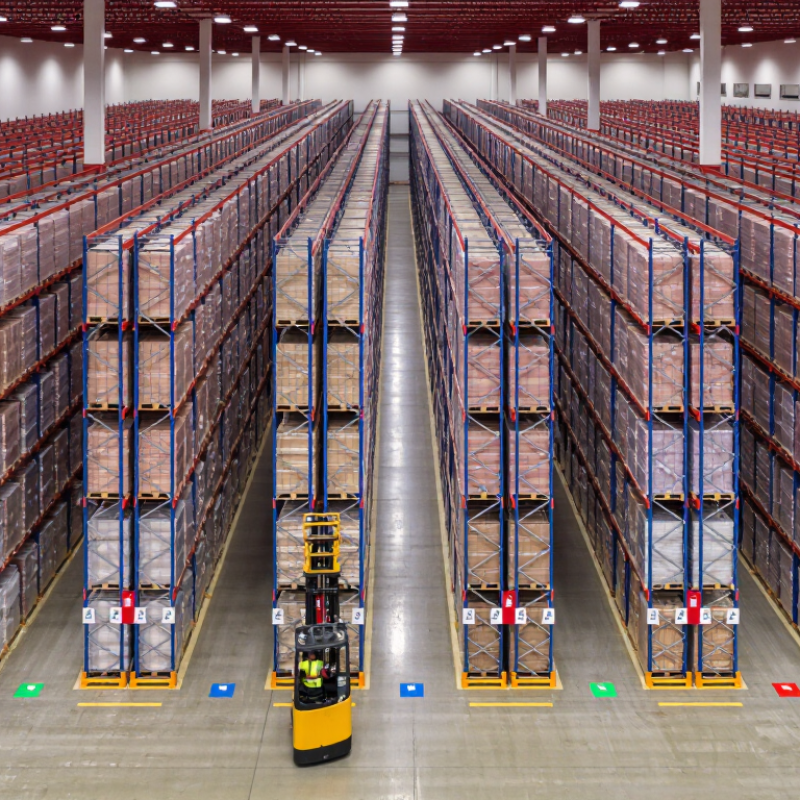
Drive-in Storage can help global buyers use warehouse space more efficiently when products arrive on stable pallets and move in repeatable batches. A forklift enters a deep lane to place or retrieve loads, reducing the need for multiple access aisles. Picture a compact distribution center: clearly labeled lanes, consistent pallet dimensions, and a forklift moving carefully between upright frames. Those details matter.

For buyers comparing systems across regions, the decision should account for more than storage density. Product turnover, pallet condition, forklift dimensions, floor quality, and local operating practices all affect performance. Drive-in Storage may suit seasonal inventory or large quantities of similar goods, but it is less flexible when workers need frequent access to individual pallets. Dense storage has trade-offs. A poorly matched layout can slow picking or complicate stock rotation.

A named expert’s quotation was not included in the supplied material, so I cannot reliably attribute a statement to one. Rather than invent a source, this introduction uses a practical design principle: “Choose the storage system around the inventory and handling process—not density alone.” Global buyers should validate specifications with qualified rack designers, compare site requirements, and review applicable safety guidance before purchase. Small differences matter. A few centimeters of clearance can shape daily forklift movement, while changing product mixes may challenge the original layout. The right system is not automatically the densest one; it is the one that fits real operations.
Why Choose Drive-in Storage for Global Buyers?

What Is Drive-in Storage and How Does It Work?

Why Choose Drive-in Storage for Global Buyers?

What Is Drive-in Storage and How Does It Work?

Drive-in storage is a high-density pallet racking system. A forklift enters the rack through an open loading face. Pallets rest on horizontal support rails inside each storage lane. The forklift places loads from the back toward the front. It later removes them from the same side. This creates a last-in, first-out flow, often called LIFO. Simple, but not flexible.

Each lane usually holds one product type or batch. This arrangement reduces aisle space and uses more warehouse volume. It can suit buyers handling uniform goods, limited stock-keeping units, or seasonal inventory. Picture a forklift moving between steel uprights, with pallets stacked several levels above the floor. Operators must keep loads centered and drive at controlled speed. Damage can occur when pallets are uneven or rails are struck.

Global buyers should review more than price and advertised capacity. Ask for tested load data, steel specifications, installation tolerances, and maintenance guidance. Confirm compatibility with local forklifts, pallet sizes, seismic conditions, fire systems, and workplace rules. A design accepted in one country may need changes elsewhere. I would not select drive-in storage for fast-moving, mixed inventory without careful testing. That choice can create hidden handling delays. In practice, a site survey, sample loading trial, and inspection plan reveal more than a polished product sheet. Even experienced teams can underestimate retrieval time.

Why Drive-in Storage Suits Global Buyers’ Needs

Drive-in storage suits global buyers because it creates high pallet density without requiring a fully automated warehouse. The system uses shared lanes, reducing aisle space and improving cubic capacity. According to the 2024 MHI Annual Industry Report, 83% of supply-chain professionals consider innovation important. That pressure makes space-efficient storage increasingly practical.

Drive-in racking works well for uniform pallets, seasonal goods, and products moving in larger batches. A forklift enters the lane, deposits pallets deep inside, and retrieves them later. Fewer aisles can reduce travel distance.

Space matters. For overseas projects, buyers should verify pallet dimensions, load ratings, forklift clearances, and local seismic requirements. Metric measurements cannot simply replace imperial specifications.

The 2024 European Self Storage Annual Survey recorded more than 16.5 million square metres of self-storage space across its surveyed markets. This reflects continuing demand for flexible storage capacity, although drive-in systems serve larger pallet operations.

The limitation is real: storage follows a last-in, first-out pattern, so product selectivity decreases. That trade-off matters. Buyers should request engineering drawings, corrosion protection details, installation records, and safety guidance before ordering. A cheaper layout may become expensive when access, inspection, or future expansion is overlooked.

Key Benefits for Warehousing and Inventory Management

Why Choose Drive-in Storage for Global Buyers?

Key Benefits for Warehousing and Inventory Management

Drive-in storage turns warehouse volume into usable inventory capacity. Its deep lanes reduce aisle space, allowing forklifts to enter the rack structure directly. This layout suits buyers holding large quantities of fewer stock-keeping units. Pallets can wait several metres inside one lane, protected from unnecessary handling. That matters when imported goods arrive in full container loads.

The 2024 MHI Annual Industry Report identified inventory and network optimization as a leading technology priority, with 92% of respondents expecting adoption within five years. Drive-in storage supports this goal physically. It concentrates similar pallets, shortens replenishment travel, and can reduce the floor area required for reserve stock. A buyer managing seasonal beverages, packaged materials, or standard cartons may gain useful capacity without expanding the building.

Space is not the whole answer.

Drive-in systems usually operate best with last-in, first-out inventory rotation. They are less suitable for perishable products, many small-volume SKUs, or strict first-in, first-out requirements. A 2023 warehouse operations survey reported that inventory accuracy remains a major performance challenge for supply-chain teams. Poor lane labeling can make dense storage harder to audit. Operators need clear load dates, pallet-quality checks, and disciplined forklift training. In practice, one damaged pallet can block an entire lane. That risk deserves honest attention.

Why Choose Drive-in Storage for Global Buyers? - Key Benefits for Warehousing and Inventory Management

Dimension How Drive-in Storage Helps Inventory Management Effect Best-Suited Inventory Planning Consideration
Storage density Stores pallets in deep lanes, with forklifts entering the rack structure; fewer access aisles may be needed than in many selective-rack layouts. Can make better use of floor area when bulk quantities of a limited range of products need to be held. High-volume goods with multiple pallets per SKU. Actual capacity depends on building height, pallet dimensions, lane depth, equipment, and required clearances.
Stock rotation Typical drive-in lanes are accessed from one end, so loading and retrieval generally follow a last-in, first-out (LIFO) sequence. Works best when strict first-in, first-out (FIFO) rotation is not required or can be managed through lane and lot controls. Non-perishable or date-insensitive inventory stored in larger lots. For expiry-sensitive products or mandatory FIFO, assess alternative systems such as pallet flow or access from both ends where appropriate.
SKU mix and selectivity Each lane is generally assigned to a product or lot, allowing deep storage while keeping lane contents grouped. Reduces direct access to every individual pallet compared with selective pallet racking; retrieval may require moving other pallets in the lane. A relatively small SKU range with several pallets per SKU or lot. A broad SKU range with frequent single-pallet picking may be better served by a more selective storage layout.
Imported and buffer stock Deep lanes can accommodate palletized bulk receipts and reserve inventory awaiting replenishment or distribution. Supports lot-based storage, provided receipt dates, lot identifiers, and lane locations are recorded consistently. Consolidated inbound shipments, seasonal reserves, and replenishment stock. Storage does not replace customs, labeling, traceability, or regulatory controls required for the goods and destination market.
Receiving and retrieval workflow Forklifts travel into lanes to place or retrieve pallets, so lane access and equipment compatibility are central to operations. Clear lane assignments and standardized put-away rules help reduce misplaced pallets and retrieval delays. Palletized products handled in planned batches. Train operators on the rack layout, load limits, safe entry, and pallet condition; inspect the rack and equipment regularly.
Inventory visibility Lane-level location tracking can link each product or lot to a defined storage position. A warehouse management system or disciplined location records can improve stock counts and support lot tracking. Inventory managed by SKU, batch, or receipt lot. Deep lanes can make individual pallets less visible and accessible; use location labels and cycle-count procedures.
Layout and total cost A compact aisle layout may reduce the floor area devoted to access aisles for suitable inventory profiles. Potential space savings should be balanced against handling time, selectivity, throughput, and operating requirements. Facilities prioritizing dense reserve storage over immediate access to every pallet. Compare the complete layout and operating costs; outcomes vary with building design, labor, equipment, and inventory turnover.

How to Evaluate Drive-in Storage Systems

Why Choose Drive-in Storage for Global Buyers?

How to Evaluate Drive-in Storage Systems

Drive-in storage suits warehouses handling many pallets of the same product. Forklifts enter storage lanes and place pallets on supported rails. This design uses vertical space efficiently and reduces unnecessary aisle area. It can be valuable where warehouse rent is high. However, dense storage often reduces direct access to individual pallets.

Evaluation should begin with your pallet dimensions, load weight, and forklift measurements. Measure the available height carefully, including sprinklers, lighting, and roof beams. Then compare the required storage depth with your inventory turnover rate. Slow-moving goods usually fit this system better than mixed, fast-moving products. Ask for structural drawings, load calculations, installation procedures, and inspection records. Documentation matters.

Check rail strength, upright protection, entry guides, and floor flatness. Small errors become expensive. A slightly uneven floor can affect forklift stability and pallet placement. Confirm whether the system matches local building and workplace safety requirements. Global buyers should also review corrosion protection for humid, coastal, or cold environments. Product tolerances may differ between suppliers, so do not rely only on catalog dimensions.

A realistic site trial can reveal problems that drawings miss. Test the heaviest pallet with the intended forklift. Watch clearance at every entry point. I have seen efficient layouts become awkward when operators lacked enough turning space. That detail is easy to overlook. Allow room for maintenance, damaged pallets, and future changes. The cheapest design is not always the safest or most adaptable.

International Purchasing, Installation, and Support Considerations

Why Choose Drive-in Storage for Global Buyers?

Drive-in storage can simplify loading when forklifts must reach several pallet positions quickly. For international buyers, the decision involves more than storage density. UNCTAD reports that about 80% of global merchandise trade by volume moves by sea. This makes shipping dimensions, corrosion protection, and container handling practical concerns. A rack that fits a warehouse may not fit a container efficiently. That mistake becomes expensive.

UNCTAD reports that about 80% of global merchandise trade by volume moves by sea.

Purchase documents should include load ratings, steel specifications, surface treatment, drawings, and installation tolerances. Local engineers may also require different anchoring or seismic details. The World Bank’s 2023 Logistics Performance Index gathered responses from 4,090 logistics professionals across 139 countries. Its framework highlights customs, infrastructure, and logistics service quality as separate performance factors. Buyers should therefore confirm packing lists, customs codes, spare parts, and delivery responsibilities before production.

4,090 logistics professionals
across 139 countries

Installation support matters just as much. Clear numbered components, bilingual instructions, and remote training can reduce site confusion. An experienced supplier should provide layout checks and respond with measurable advice, not vague promises. Small details matter. For example, a damaged beam protector can affect daily traffic safety. Yet remote support is not perfect; local contractors may interpret drawings differently. A pre-installation video call, signed checklist, and photographic inspection can expose gaps early. This process costs time, but replacing incorrectly installed sections costs more.

Clear numbered components
Bilingual instructions
Remote training
Photographic inspection

FAQS

What is drive-in storage?

It is a dense pallet-racking system with open lanes. A forklift enters each lane to place or retrieve pallets. It saves aisle space, but limits direct access.

How does pallet flow work?

Pallets are usually loaded from the front toward the back and retrieved from the same side. This creates last-in, first-out (LIFO) handling. Not always ideal.

Which inventory suits this system?

It often suits warehouses holding many pallets of the same product or batch. Slow-moving and seasonal stock may fit well. Mixed, fast-moving goods can be harder to manage.

What should buyers measure before choosing a system?

Check pallet size and weight, forklift dimensions, available height, and storage depth. Include sprinklers, lights, and roof beams in height checks. Measure carefully.

What are the main trade-offs?

Dense lanes can reduce aisle space and increase warehouse capacity. But individual pallets are less accessible, and retrieval may take longer. I would test the layout before committing.

What documents should international buyers request?

Ask for load ratings, steel specifications, structural drawings, installation tolerances, and maintenance guidance. Confirm packing lists, spare parts, and delivery responsibilities. Documentation matters.

How can buyers check whether a design will work onsite?

Trial the heaviest pallet with the intended forklift. Check entry clearance, turning space, floor flatness, and pallet placement. Drawings alone may miss awkward movements.

What installation and maintenance details deserve attention?

Use clear component labels, installation checklists, and photo inspections. Inspect rails and beam protectors for damage. Remote advice helps, but local teams may interpret drawings differently.

Conclusion

Drive-in Storage is a high-density pallet racking system that allows forklifts to enter storage lanes and place or retrieve pallets directly. By reducing the space needed for aisles, it can help warehouses make better use of available floor area. This approach is especially useful for global buyers managing large quantities of similar products, where efficient space use, organized inventory, and predictable handling are priorities.

When evaluating Drive-in Storage, buyers should consider pallet dimensions and weight, forklift compatibility, expected inventory turnover, lane depth, and the balance between storage density and product accessibility. They should also assess material quality, installation requirements, safety features, and how the system can adapt to future operational needs. For international purchases, clear communication about specifications, shipping, installation coordination, documentation, and ongoing technical support can help ensure the system meets the warehouse’s requirements from delivery through daily use.

Oliver

Oliver

Oliver is a seasoned marketing professional with a wealth of expertise in driving brand awareness and engagement. With a deep understanding of our company's product offerings, he consistently delivers high-quality content that enriches our professional blog. His insights not only shed light on......