China Best Logistics Services Infrastructure Factory & Exporters

Precision Engineering, Intelligent Warehousing, and High-Performance Pallet Racking Systems for Global Supply Chains

1. The Paradigm Shift in Global Logistics & Physical Infrastructure

Analyzing the vital linkage between storage machinery, structural engineering, and modern material handling efficiency.

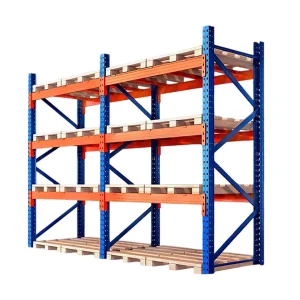
In an era defined by micro-fulfillment centers, disrupted marine freight pipelines, and rapid e-commerce expansion, logistics services are no longer merely transactional operations. They represent the core operational architecture of global supply chains. At the heart of this physical architecture lies heavy-duty warehousing systems. High-density storage racking is the foundational element that transforms simple warehouse space into a highly efficient, vertical throughput engine.

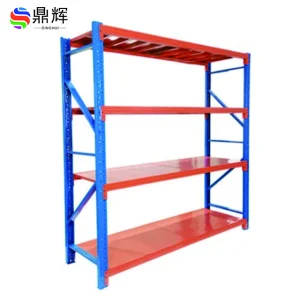
When procurement executives search for the "best logistics services factory and exporters" in China, the strategic focus spans beyond shipping logistics companies. It targets the physical infrastructure manufacturers that supply automated warehouses, heavy-duty pallet racks, and industrial mezzanine platforms. Without structural integrity, precision cold-rolled steel profiling, and optimized floor-load mechanics, modern 3PL networks cannot deliver high-speed sortation, cross-docking, or inventory safety.

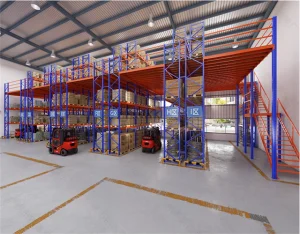
Globally, industrial sites face the challenge of skyrocketing land costs. Expanding horizontally is no longer a viable strategy for most distribution hubs in North America, Europe, or Southeast Asia. Consequently, the global supply chain relies heavily on vertical cubic space optimization, which demands heavy-duty steel shelving capable of supporting up to several tons per pallet bay without structural fatigue.

The Operational Cost Link

Research indicates that utilizing high-capacity multi-level racking systems reduces warehouse footprint requirements by up to 60%. This optimization lowers temperature maintenance overheads, cuts down transit times within pick-zones, and directly improves picking accuracy for logistics networks worldwide.

Foshan Dinghui Intelligent Warehousing: Corporate Scale & Capabilities

A statistical summary of our manufacturing authority and global export footprints

38,000 m²
Manufacturing Base
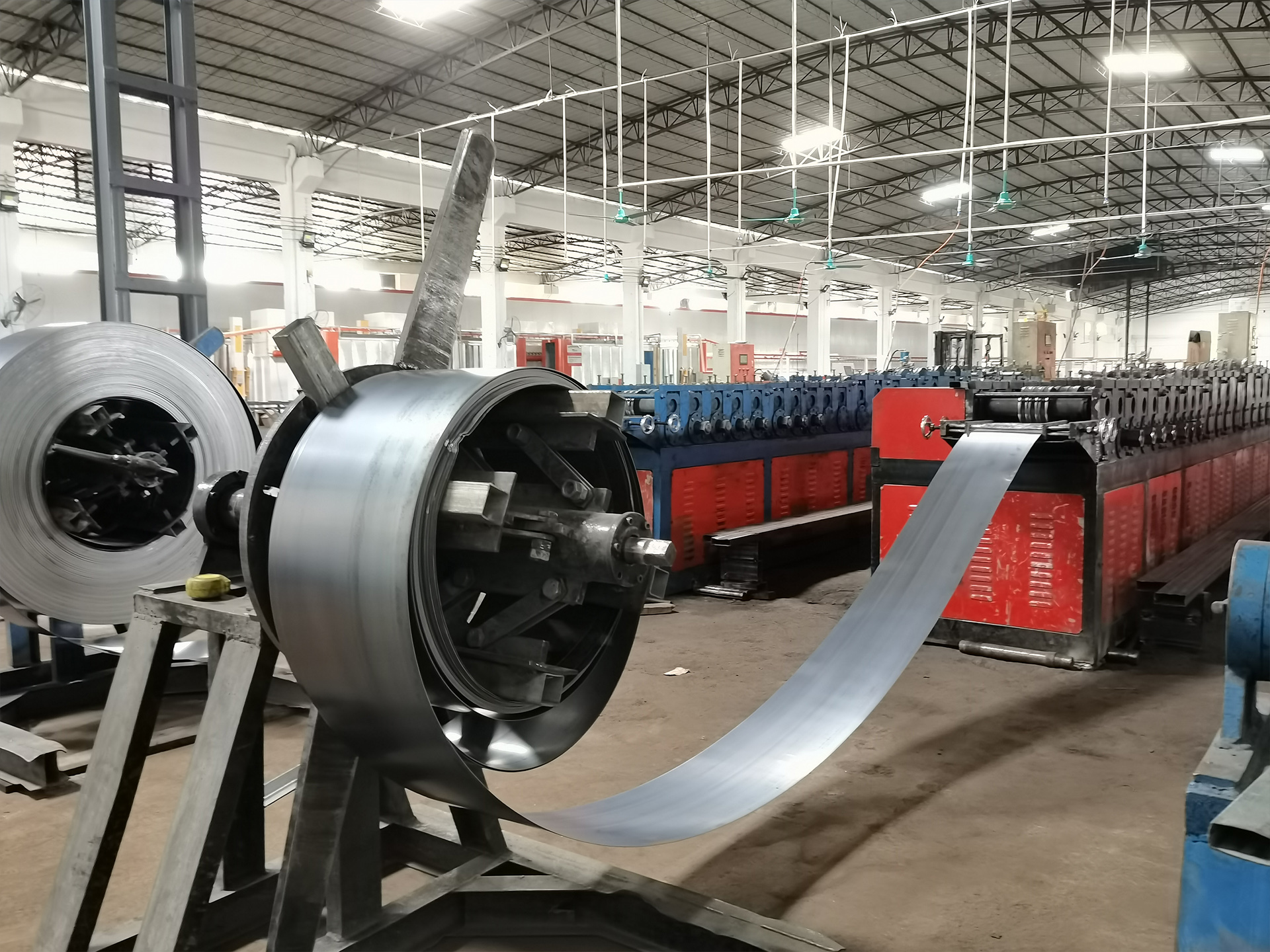
Advanced facilities in Foshan equipped with automated roll-forming and powder-coating lines.
12 Years
Industry Experience
Over a decade of structural steel racking design, metallurgical R&D, and engineering expertise.
$25 Million+
Annual Export Revenue
Supplying heavy-duty systems directly to commercial hubs in NA, EU, SEA, and the Middle East.
850+
Supply Chain Partners
A robust global network ensuring seamless logistics execution and component deliveries.
35 Members
QA / QC Specialist Team
Executing rigorous tensile, structural, NDI, and coating adhesion tests.
18 Engineers
Senior R&D Department
Providing customization, seismic-resistant designs, and automated system integration.
45 Upgrades
New Designs Annually
Continuous technical innovation to match changing market demands.

2. The Competitive Advantage of Chinese Logistics Infrastructure Factories

Why domestic production efficiency, material integration, and custom capability outpace localized global suppliers.

The global sourcing of warehousing racking systems heavily favors Chinese exporters for distinct structural reasons: scale, raw material processing speed, and automation integration. Established in 2015, Foshan Dinghui Intelligent Warehousing Technology Co., Ltd. leverages a highly localized steel supply chain, utilizing top-tier cold-rolled coils to form heavy-duty uprights and box beams.

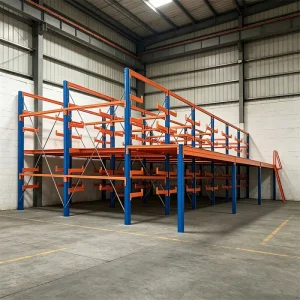
Traditional localized manufacturing in overseas markets often struggles with limited rolling capabilities and higher labor overheads, leading to long lead times for custom mezzanine or cantilever platforms. Conversely, our modern facility coordinates manufacturing from rolling and stamping to surface treatment within a unified, 38,000-square-meter facility. This integration translates directly to:

  • Structural Customization (OEM/ODM): Tailoring physical profile dimensions, upright punch patterns, and load capacities (ranging from 500kg to over 4,000kg per level).
  • Advanced Metallurgy: Utilizing Q235 and Q355 structural carbon steel, ensuring optimal yield strength and elasticity coefficients to safely handle cyclic stress from forklifts and automated guided vehicles (AGVs).
  • Anti-Corrosive Electrostatic Powder Coatings: Every upright and beam undergo multi-stage chemical pre-treatment (pickling, phosphating) before receiving an anti-corrosive powder coat, achieving high adhesion indexes under rigorous testing.

Localized Industry Application Scenarios

Custom structural engineering adapted to the operational requirements of global industries

Automotive Stamping & Heavy Dies
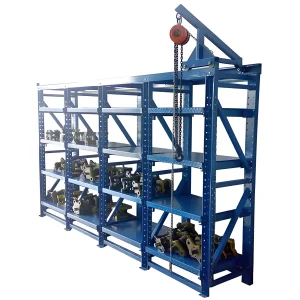
Automotive manufacturing plants require extreme heavy-duty storage capability. Our custom die racks feature structural roll-formed steel, safety pins, and specialized deck supports to securely store stamps and molds weighing several tons without sagging.
E-Commerce & 3PL Fulfillment Hubs
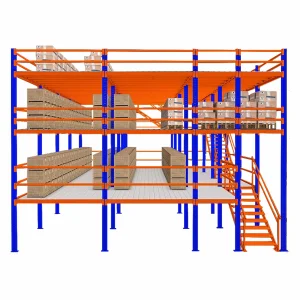
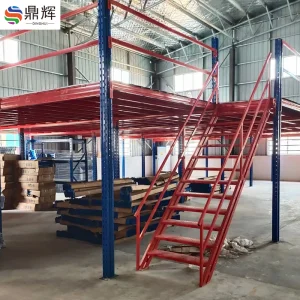
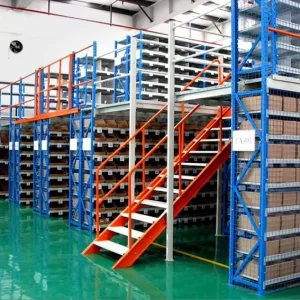
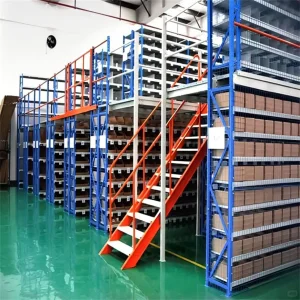
With high turnover rates and rapid inventory turns, e-commerce hubs require multi-tier mezzanine floors and adjustable boltless shelving. These platforms optimize picking zones and accommodate vertical sorting systems, maximizing SKU capacities.
Cold Storage & Pharmaceutical Facilities
Sub-zero environments require specialized materials. Cold-drawn steel profiles coupled with low-temperature powder coatings prevent structural embrittlement, protecting stored products and ensuring structural safety in refrigeration facilities.

3. E-E-A-T Validation: Quality Testing Protocols & Engineering Standards

Demonstrating compliance with global safety and structural criteria

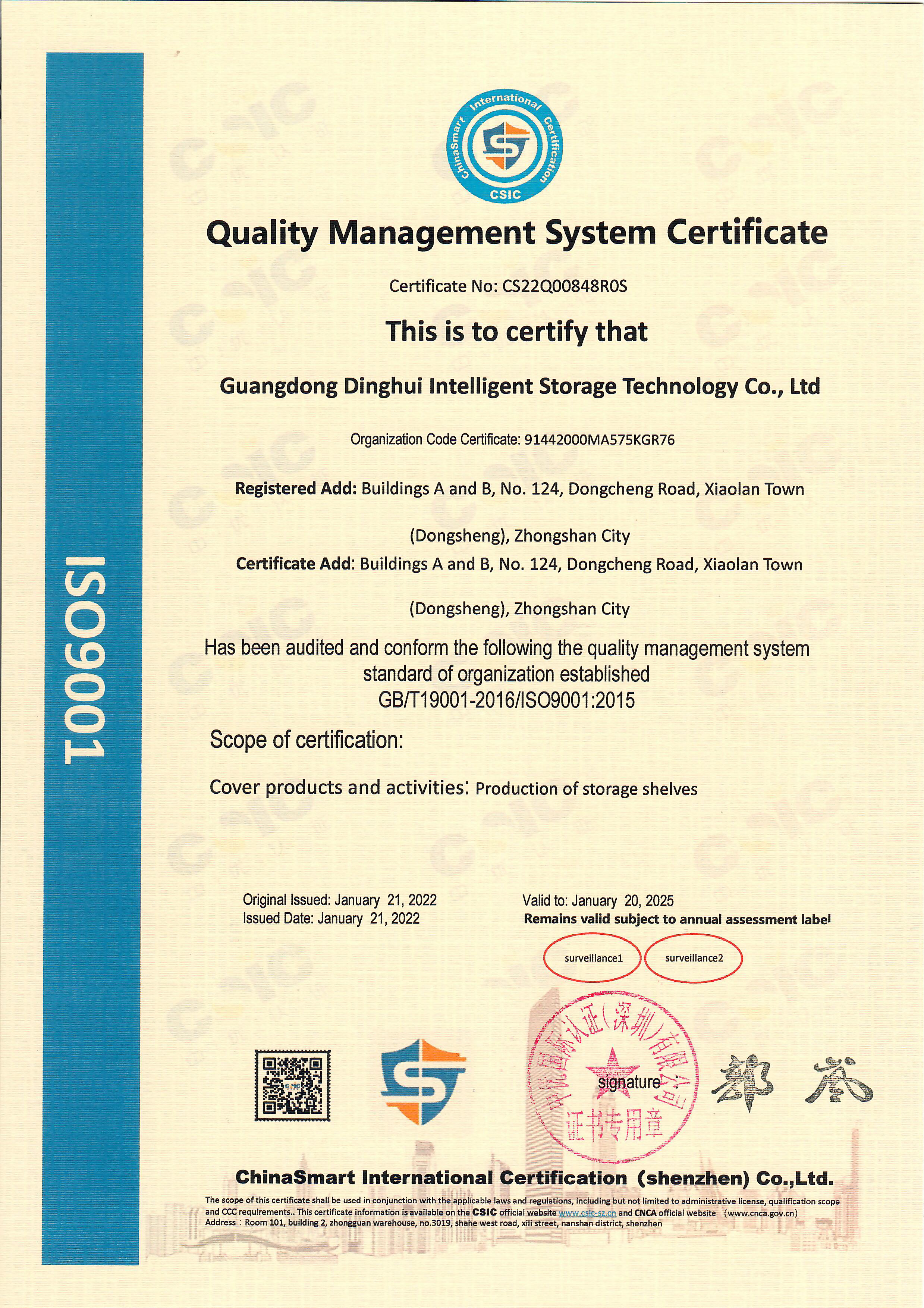
For international logistics procurement agents, safety and reliability are paramount. Storage rack structural failures can lead to inventory losses, operational disruptions, and safety issues. Therefore, Foshan Dinghui maintains a rigorous quality assurance and quality control procedure aligned with ISO 9001 and CE certification standards.

Mandatory Material & Weld Integrity Audits

Our dedicated 35-member QA/QC team executes localized testing before any components leave the factory:

  • Raw Material Tensile Testing: Testing every batch of steel coils to ensure yield and tensile strengths match international engineering standards.
  • Structural Load Simulation: Utilizing localized finite element analysis (FEA) to verify load deflection values and structural reserve factors under uniform loading conditions.
  • Weld Non-Destructive Inspection (NDI): Inspecting critical structural welds (upright-to-faceplate joints) to verify depth and structural integrity.

Additionally, we conduct daily powder coating adhesion tests (cross-cut testing) to verify that the protective finish remains resilient against impacts and friction in high-throughput warehouse environments. By implementing these structural verification steps, we assure global distributors and logistics operators that our systems are engineered for long-term operational durability.

Through continuous process refinement and engineering upgrades, we launched 45 new product designs and structural upgrades last year, allowing our clients to integrate the latest storage innovations into their operations.

Technical FAQ - Smart Warehousing & Storage Systems

Expert insights on logistics infrastructure, safety compliance, and procurement best practices

Q1: How do I determine the appropriate steel grade (e.g., Q235 vs. Q355) for my warehouse racks?
The selection depends on the maximum structural load per pallet position and overall height requirements. Q235 steel is a standard structural mild steel widely utilized for standard configurations up to 8 meters high with loads under 1,500kg per level. For taller dynamic systems (e.g., automated retrieval platforms) or heavier loading criteria (exceeding 2,000kg per level), high-strength Q355 steel is recommended to maintain the safety factor while optimizing material profiles.
Q2: What is the main structural advantage of a boltless design over standard bolted racking?
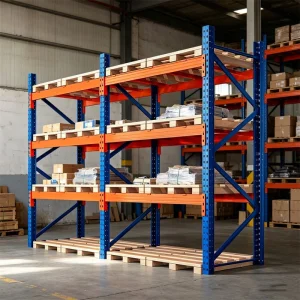
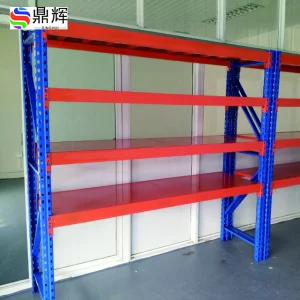
Boltless racking systems rely on locking mechanisms, such as tapered keyhole or teardrop connection plates, that tighten under load. This configuration simplifies installation, decreases assembly time by up to 50%, and minimizes maintenance needs since there are no threaded bolts that can loosen over time under constant dynamic loading.
Q3: How do your multi-tier mezzanine floors maximize overhead space in retail logistics?
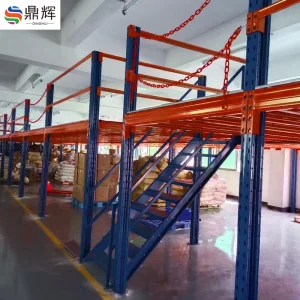
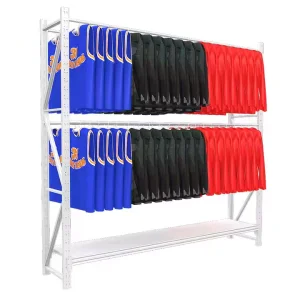
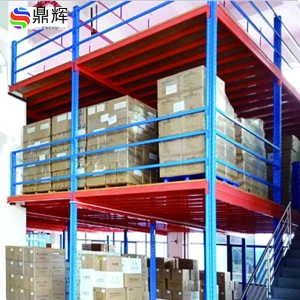
Mezzanines convert vertical clear height into multiple work levels, doubling or tripling storage square footage without expanding the building's footprint. This is suitable for e-commerce and retail apparel logistics, allowing hand-picking on upper levels while keeping the ground floor clear for pallet movement or dispatch.
Q4: Why is chemical pre-treatment essential before applying powder coating?
Raw steel profiles contain surface oxides, scale, and processing oils. Without multi-stage pre-treatment (typically involving degreasing, pickling, and phosphating), the electrostatic powder coating cannot achieve a strong chemical bond with the substrate, making it prone to chipping and peeling when subjected to pallet impacts, leading to early corrosion.
Q5: How does seismic design influence the profile of structural columns?
In seismically active areas, structures must absorb and dissipate lateral energy. Our engineering team designs racking with larger baseplates, thicker steel walls, and modified upright profiles, increasing the system's resistance to overturning moments according to localized building regulations.

Facility Operations & Quality Documentation

Direct view into our factory floor, roll forming facilities, and ISO certification
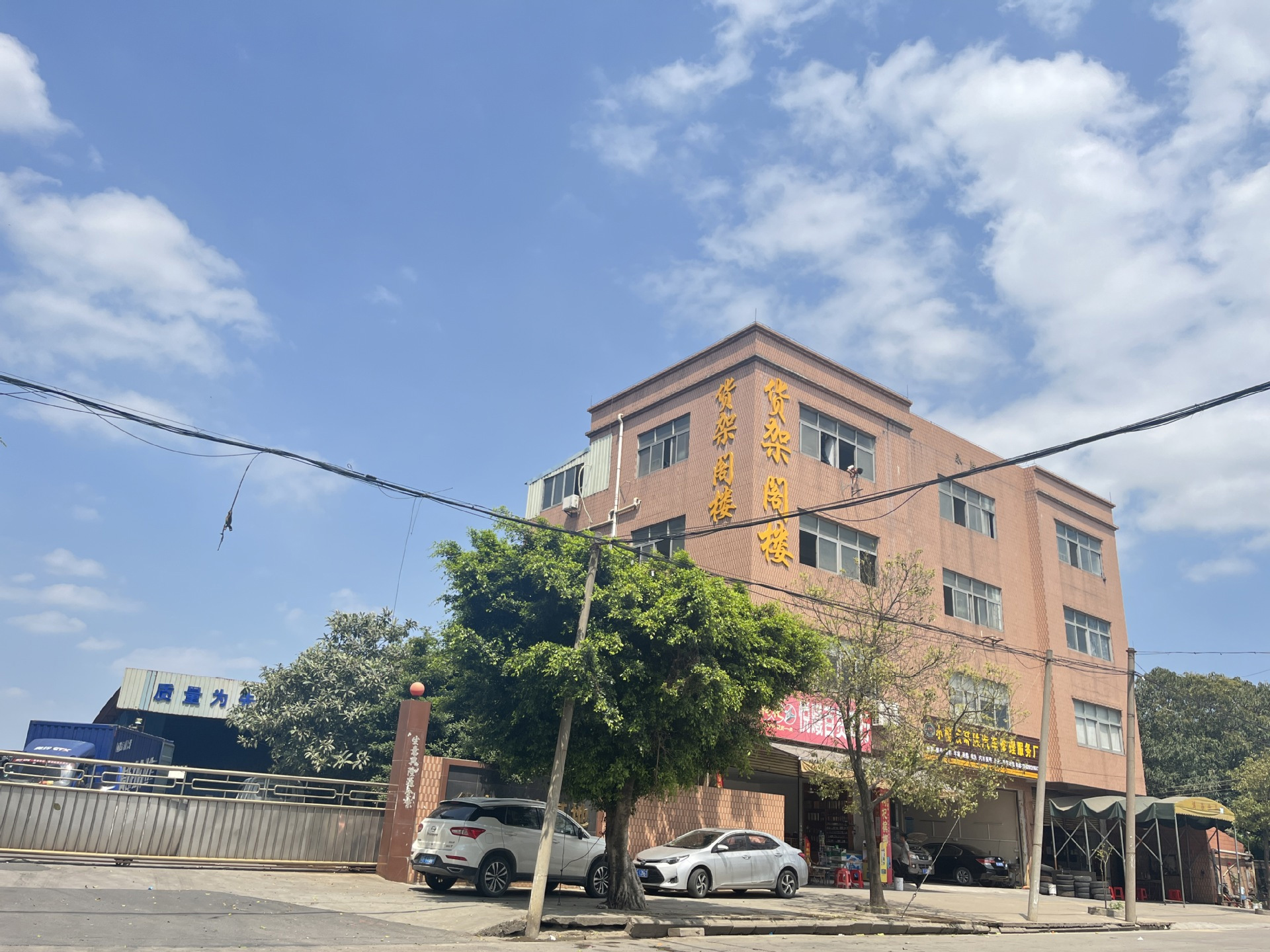
Foshan Dinghui Factory Floor Operations
Precision Engineering Operations
Automated Roll-Forming Lines
Quality Inspection Protocols
Continuous Quality Audits
ISO 9001 Certified System
ISO 9001 Certification Quality Standards