⚙️
Custom OEM Freestanding Racks: Engineering Principles & Strategic Sourcing Whitepaper
In modern supply chain architecture, structural stability and spatial optimization are not merely logistical concerns—they are crucial components of capital efficiency. A custom OEM freestanding rack acts as the physical backbone for warehouse storage, industrial processing lines, e-commerce fulfillment hubs, and heavy-duty product display grids. Unlike standard wall-anchored structures, freestanding racks provide unmatched flexibility in load layouts, floor configurations, and scalable material handling procedures.
For international procurers, logistics directors, and structural engineers, choosing the right custom OEM freestanding rack manufacturer involves examining structural design limits, metallurgical consistency, global certification standards, and supply chain continuity. This document presents a comprehensive analysis of industrial freestanding racking systems, focusing on structural engineering capabilities, QA/QC standards, global export operations, and structural design configurations.
38,000 m²
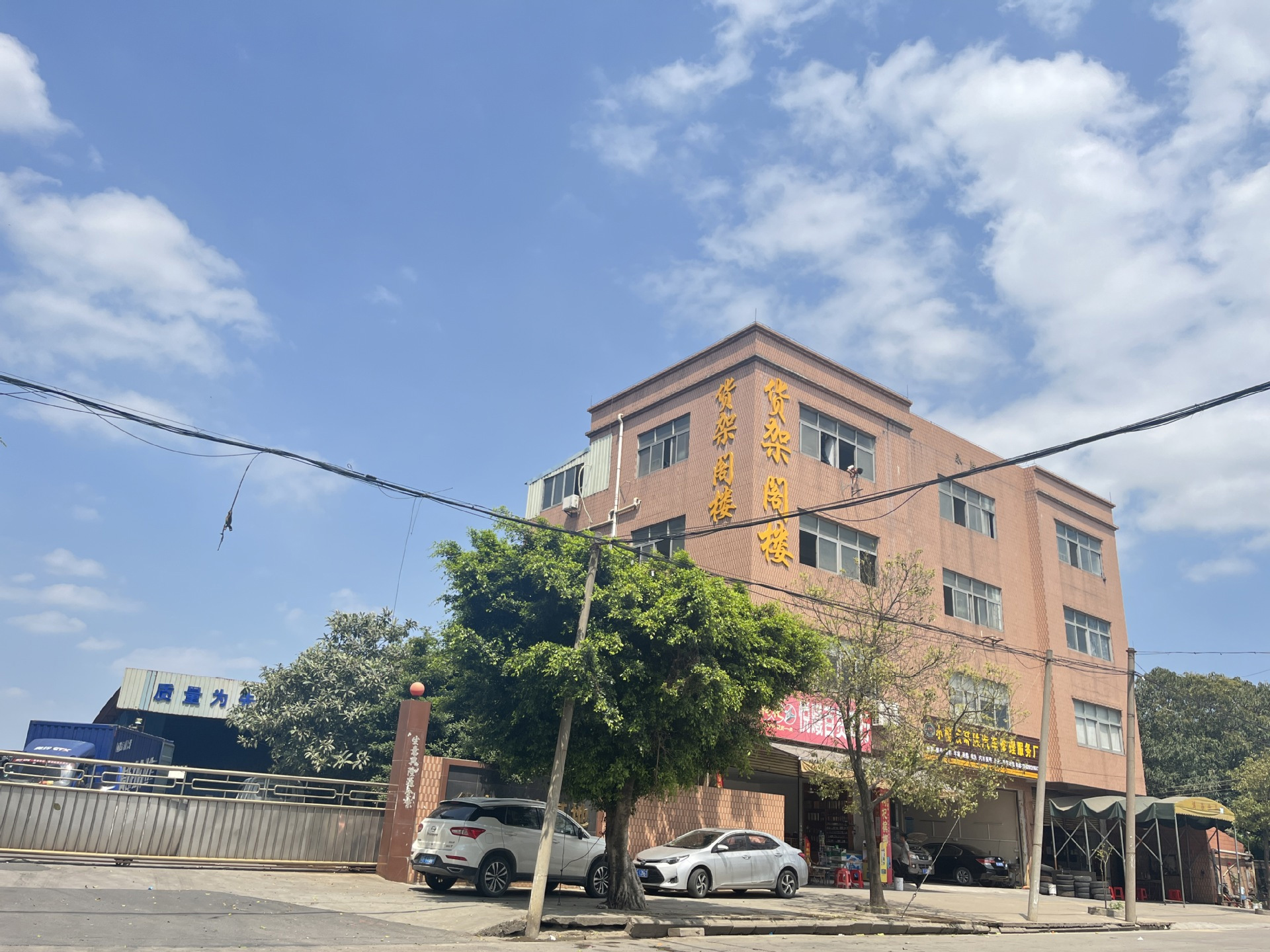
Modern Manufacturing Facility
12 Years
Industrial Racking Experience
$25M+
Annual Export Revenue
🏢
Foshan Dinghui Intelligent Warehousing Technology Co., Ltd.
Established in 2015, Foshan Dinghui Intelligent Warehousing Technology Co., Ltd. is a leading manufacturer specializing in heavy-duty industrial storage racks, pallet racking systems, and automated warehouse solutions. Operating from a modern manufacturing facility spanning 38,000 square meters, we bring together 12 years of industry experience and 8 years of direct global export expertise, generating an annual export revenue of over $25 million USD.
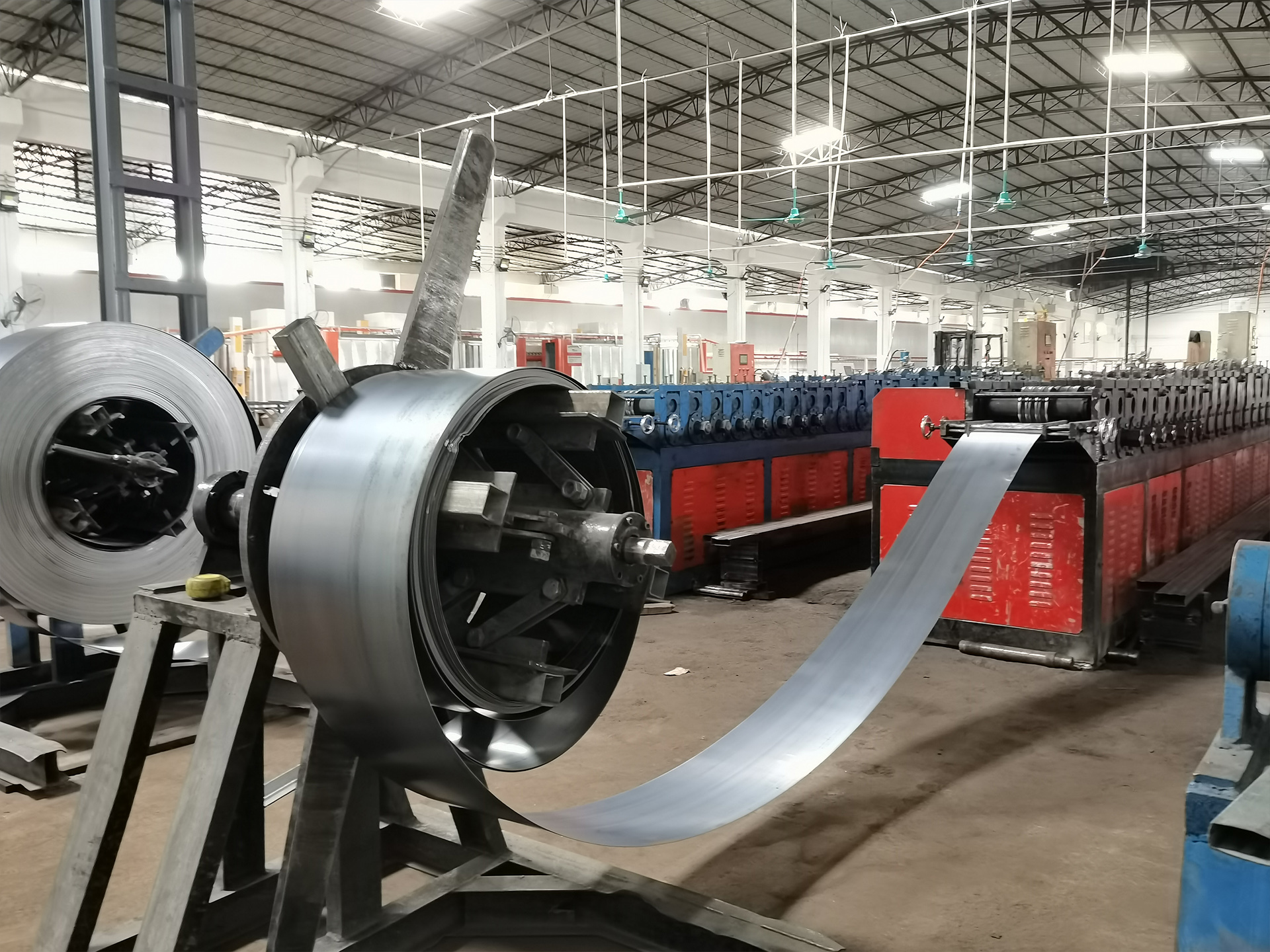
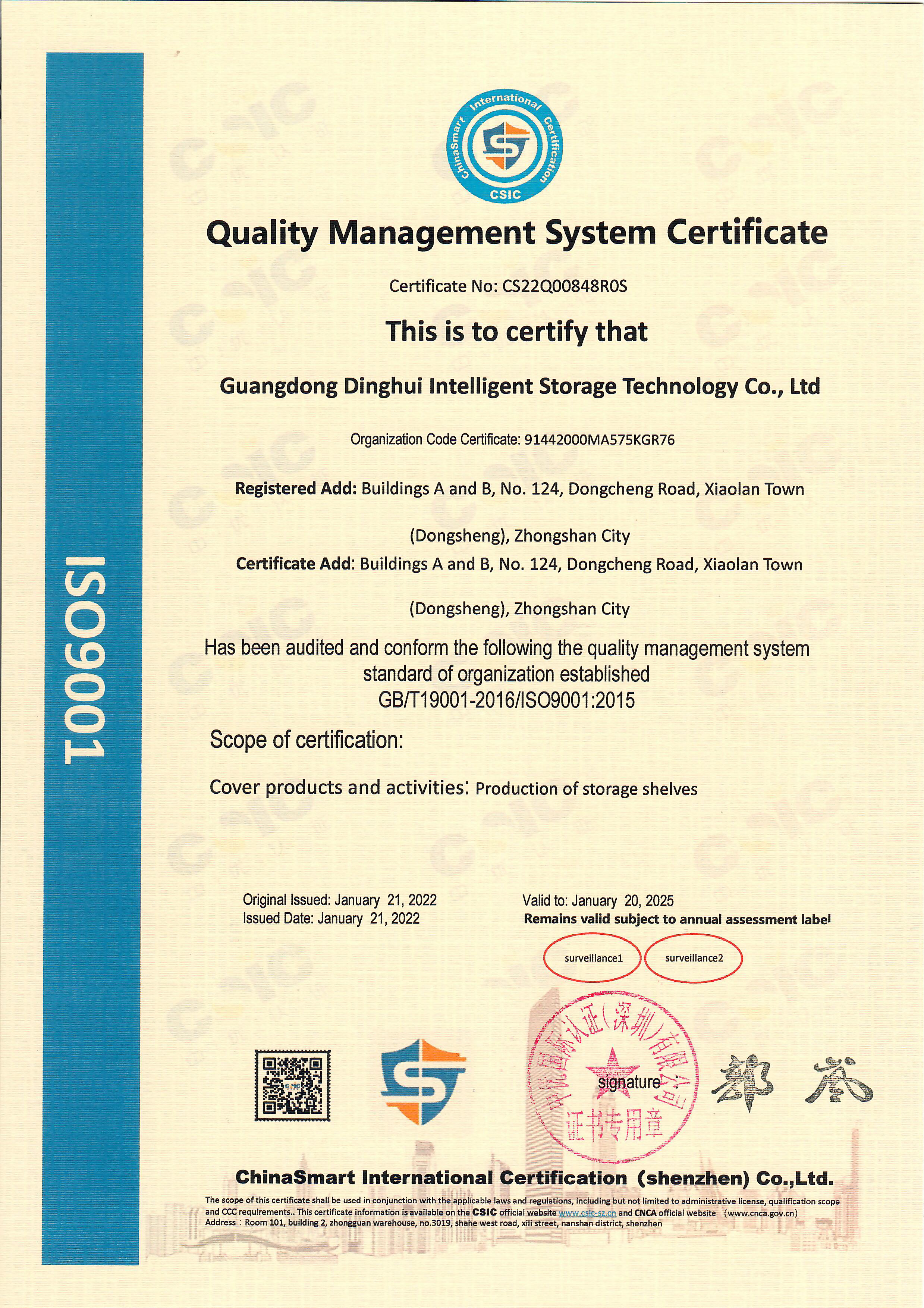
Our facility is equipped with advanced automated roll-forming machines, high-precision robotic welding arms, and automated electrostatic powder coating lines. Our quality control system adheres strictly to ISO 9001 and CE certification standards. We run a comprehensive testing protocol on all product components, including raw material tensile testing, structural load-bearing simulation, powder coating adhesion tests, and weld non-destructive inspection (NDI). Supported by a dedicated 35-member QA/QC team, we verify that every racking component meets international safety, reliability, and structural durability standards.
With a strong background in international OEM/ODM trade, our primary markets cover North America, Europe, Southeast Asia, and the Middle East. Operating with a robust network of over 850 reliable supply chain partners, we serve a diverse global client base, including 3PL logistics providers, industrial warehouse operators, e-commerce fulfillment centers, and regional distributors.
⚡
China's Racking Supply Chain: Strategic Competitive Advantages
Procuring custom freestanding racking systems from Foshan, China, offers distinct advantages across manufacturing, supply chain coordination, and cost efficiency. The industrial cluster in Foshan provides:
📦
Metallurgical Integration & Raw Material Selection
Direct integration with domestic high-grade steel manufacturers ensures a steady supply of premium Q235B and Q355B cold-rolled steel. This proximity reduces material transit times and maintains consistent physical properties across production batches.
⚙️
Advanced Automation & Scale Efficiency
By using automated, multi-station roll-forming lines alongside robotic welding arrays, we minimize dimensional variances. Precision punching of upright patterns guarantees exact spacing, allowing for fast field assembly and reliable load-bearing performance.
🌐
Optimized Export Logistics
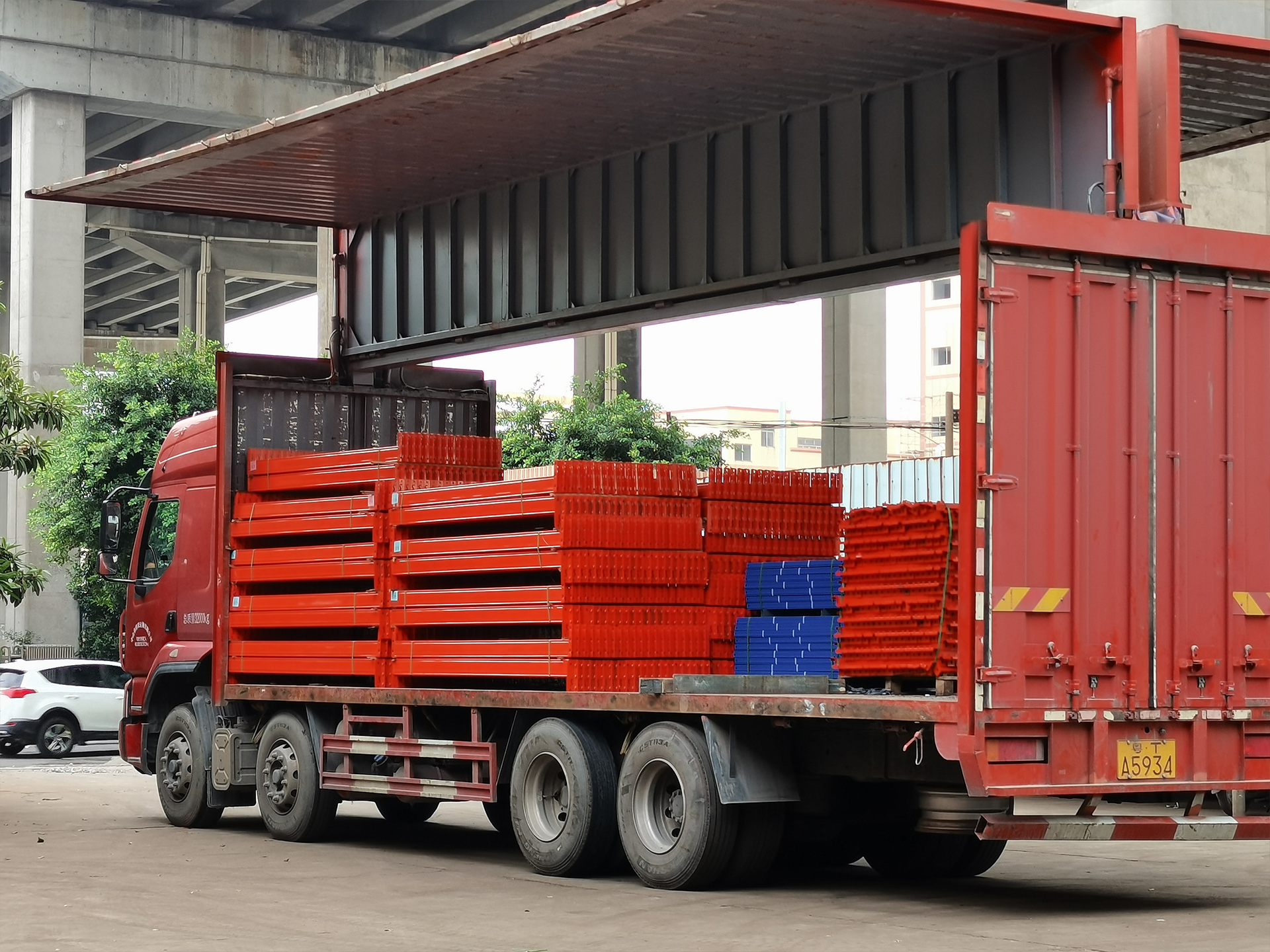
Foshan's location in the Pearl River Delta provides efficient access to major shipping ports, including Shenzhen, Guangzhou, and Hong Kong. This allows us to offer shorter shipping windows, flexible container consolidation options, and reduced global freight costs.
🛡️
Local Compliance, Material Testing & Quality Engineering
Industrial racking installations must adhere to regional building codes, seismic regulations, and workplace safety laws. At Foshan Dinghui, our structural engineering team calculates loading margins in accordance with key global standards, such as the Rack Manufacturers Institute (RMI) specifications in North America, FEM 10.2.02 standards in Europe, and AS4084 regulations in Australia.
Comprehensive Testing Protocol
- Raw Material Tensile Strength Tests: Ensures that incoming steel coils meet nominal yield strengths (up to 355 MPa) and exhibit appropriate elongation properties under load.
- Structural Load Simulation (FEA): Using Finite Element Analysis to simulate real-world static and dynamic loads, accounting for seismic factors, forklift impacts, and configuration changes.
- Weld Integrity & Non-Destructive Inspection (NDI): Ultrasonic and magnetic particle inspections of high-stress weld zones on baseplates and beam connectors.
- Powder Coating Durability: Standardized cross-cut adhesion tests, impact resistance assessments, and salt-spray corrosion tests to ensure long-term surface protection.
ISO 9001 Certified Quality Control System
🚀
OEM/ODM Customization Matrix: Tailoring Solutions to Enterprise Specifications
Industrial storage environments present distinct operational challenges. Recognizing that off-the-shelf racking rarely meets unique space or load requirements, our R&D team (supported by 18 senior R&D engineers) designed a flexible customization matrix:
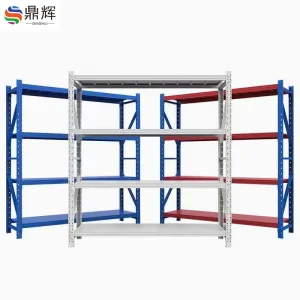
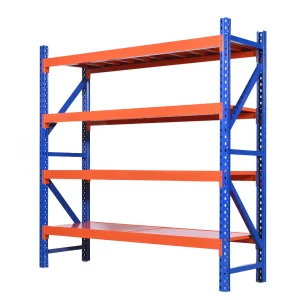
- Load Capacity Customization: Engineering light-duty shelves (200kg per level) up to heavy-duty industrial designs (exceeding 4,000kg per bay).
- Surface Finish Options: High-durability thermosetting epoxy-polyester powder coating for standard warehouses, hot-dip galvanization for outdoor environments, and specialized anti-corrosion treatments for cold storage.
- Seismic-Resistant Structures: Enlarged footplates, heavy-duty floor anchor systems, and customized frame bracing designed to comply with local seismic risk maps.
- Automated Integration (AS/RS & Shuttle Systems): Precise manufacturing tolerances (within +/- 1mm) to ensure racking works seamlessly with automated guided vehicles (AGVs), laser sensors, and robotic stacker cranes.
📈
Future Trends in Freestanding Storage Systems
As industrial storage evolves, several key technology and design trends are shaping the future of freestanding racks:
- High-Bay Optimization: Designing taller freestanding structures (often exceeding 15 meters) that do not require building tie-ins, saving structural modification costs and simplifying building permits.
- Modularity & Rapid Reconfigurability: Boltless connection systems and teardrop hole designs that allow operations to quickly adjust storage layouts as product mixes change.
- Eco-Friendly Manufacturing: Adopting energy-efficient curing processes for powder coatings and maximizing recyclable steel content to align with corporate sustainability targets.
🎯
Localized Application Scenarios: Industrial Performance in Practice
Our freestanding racking systems are deployed globally across diverse industrial applications:
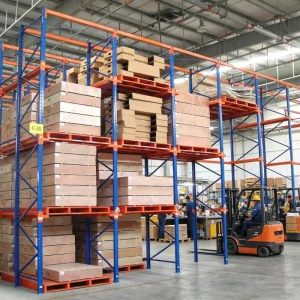
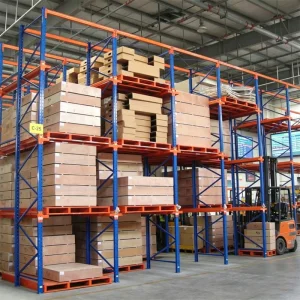
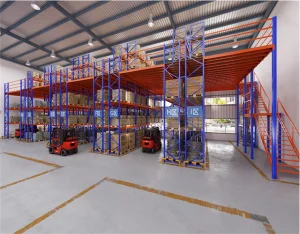
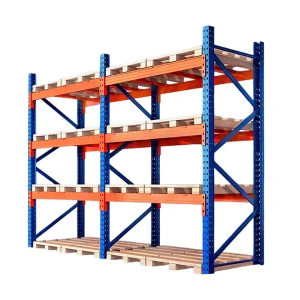
- 3PL Fulfillment Centers: High-density pallet setups with quick forklift access, designed for high SKU counts and continuous shipping operations.
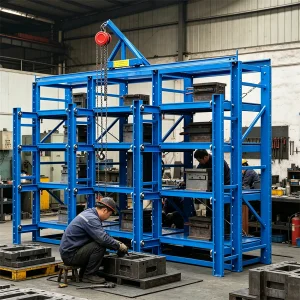
- Automotive Parts Storage: Specialized heavy-duty drawers and cantilever racks designed for irregular components, heavy molds, and stamping dies.
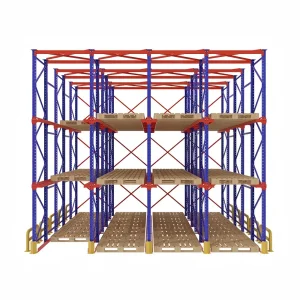
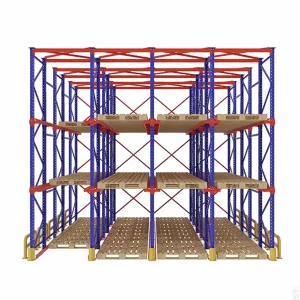
- Cold Storage & Deep-Freeze Zones: Drive-in racking arrays that maximize cold air circulation while maintaining structural strength in temperatures down to -30°C.
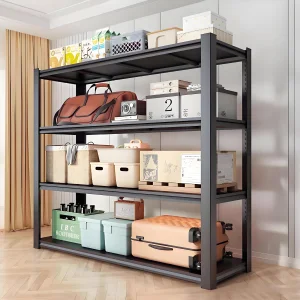
- Commercial & Garage Shelving: Robust steel wire rack systems that combine strength, easy assembly, and simple maintenance for light industrial and retail back-of-house storage.
❓
Custom OEM Freestanding Racks FAQ
Q1: How do you determine the load capacity of a custom freestanding racking system?
Load capacity calculations are based on structural profile engineering, steel grade selections, and regional safety design codes (like RMI or FEM). We review the load distribution, unit loads (weight per pallet/level), seismic zone data, and forklift operations. This structural analysis ensures the rack can safely support the specified maximum load with a built-in safety factor (typically 1.5 to 1.8).
Q2: What is the lead time for custom OEM racking orders from your factory?
For standard OEM products, our production cycle is typically 20 to 30 days after drawing approval and deposit receipt. For complex customized projects requiring specialized tooling or custom structural steel runs, the lead time ranges from 35 to 45 days. We also offer expedited planning to fit tight project construction timelines.
Q3: How are components packaged to prevent damage during containerized sea transit?
All structural elements, like upright frames, beams, and support bars, are securely wrapped in high-density bubble wrap and bound with plastic strapping on custom wooden or steel pallets. Corner protectors and cardboard layering prevent metal-on-metal friction. This packing method ensures the finish is protected and cargo stays secure during long transit times.
Q4: Are your racking structures compatible with dynamic warehouse automation?
Yes, our custom OEM/ODM racking designs can be manufactured to the tight tolerances required by Automated Storage and Retrieval Systems (AS/RS), shuttle racks, and AGV floor paths. Standard fabrication tolerances are controlled within +/- 1mm to ensure smooth sensor alignment and precise vehicle travel.
Q5: What finishes do you recommend for anti-corrosion protection?
For typical indoor applications, we use an electrostatic powder coating. For cold storage, high-humidity, or outdoor applications, we recommend hot-dip galvanizing (HDG) or specialized anti-rust base primer coats beneath the powder finish. This ensures the steel is protected against oxidation and mechanical wear.
Q6: Do you supply structural certification and engineering drawing reviews?
Yes, our R&D engineering division provides detailed 3D design models, structural layouts, and load rating calculations. Where required, we can work with certified third-party testing agencies to provide compliance documentation for local building codes.
 Dinghui Racking