A deep-dive buyer’s guide to e-commerce fulfillment infrastructure, industrial racking exporters, warehouse safety evidence, localization support, compliance assurance, and total cost of ownership.
This query is not a single-intent keyword. It blends supplier discovery, export capability verification, product benchmarking, and logistics infrastructure planning. A useful answer therefore cannot be a thin directory. It must explain what is being bought, how to verify it, and where local project risks appear.
Google’s Search Quality Rater Guidelines reward pages that demonstrate first-hand experience, subject expertise, authority, and trustworthiness. For a China-based rack manufacturer or exporter, that means showing the manufacturing base, engineering team, QA/QC process, certifications, test protocols, export markets, OEM/ODM capability, and the practical limits of customization. It also means separating storage-equipment manufacturing from logistics services: freight forwarders, 3PLs, and rack manufacturers solve different problems, even when they appear in the same search result.
Information gain is the difference between a supplier list and a procurement tool. This whitepaper gives buyers a semantic map of e-commerce logistics storage: high-density pallet racking, mezzanine platforms, drive-in systems, mobile compaction, cantilever racks, mold racks, tire racks, wire shelving, and automation-ready interfaces. It also adds the questions that reduce rework: How is load capacity validated? Which coating fits a humid port warehouse? What does CE or ISO evidence actually cover? How will spare parts reach an overseas site? Which design choices protect a future AMR or AS/RS upgrade?
These eight products represent common building blocks for e-commerce fulfillment centers, 3PL warehouses, distribution hubs, and industrial storage projects. Product URLs and image assets are preserved below for direct technical review.
E-commerce logistics is moving from a support function to a revenue-critical system. SKU counts keep expanding, order profiles fragment into small batches, service-level promises shorten, and peak events stress every pick path. Warehouses are simultaneously asked to hold more inventory, release it faster, and document safety more thoroughly.
In that environment, steel racking is not a passive shelf. It is a structural layer that determines storage density, aisle design, picking productivity, fire access, and future automation. A pallet racking layout that works for a stable wholesale warehouse may fail in an e-commerce fulfillment center where thousands of SKUs, returns, gift wrapping, and same-day dispatch share the same floor.
China remains an important manufacturing market for this equipment because it combines steel supply, roll-forming capacity, powder-coating ecosystems, engineering talent, and export logistics. Yet an export-ready partner is more than a low price per kilogram. Buyers should compare material traceability, section design, beam-to-column connections, weld inspection, coating adhesion, packaging for ocean freight, installation method statements, spare-parts continuity, and documentation quality. The best supplier reduces total project risk, not only unit cost.
E-commerce fulfillment networks in the U.S. and Canada often require load charts, seismic and anchorage rationale, column protection, lock-out procedures, and compatibility with RMI/ANSI-style design reviews. Local fire code, permit approval, and floor-slab verification should be closed before fabrication begins.
CE marking, EN framework considerations, workplace safety, packaging waste, and carbon reporting influence procurement. RFQs often ask for structural calculations, declaration documents, installer competence, and third-party review where required by the project or local authority.
Humidity, heat, flooding risk, and seismic or typhoon zones make corrosion protection and drainage important. Cross-border e-commerce bonded warehouses, regional distribution centers, and multi-client 3PLs need flexible beam levels, clear labeling, and fast spare-parts response.
High temperature, dust, large distribution hubs, and rapid project schedules put pressure on coating quality, installation sequencing, and after-sales support. UV-resistant finishes, ventilation planning, and robust packaging help protect long-term performance.
Behind the supplier query are six recurring buying intents. A page that answers all six performs better for semantic search because it satisfies product, safety, compliance, localization, commercial, and future-readiness questions in one evidence-based resource.
Clarify carton, pallet, long-load, tire, mold, archive, or light-duty picking storage. The wrong starting typology creates aisle waste, unsafe loading, or expensive rework after the steel is already fabricated.
Request rated capacity, deflection limits, material certificates, weld NDI reports, coating tests, and project-specific calculations. Treat load charts as engineering documents, not marketing claims.
Map ISO 9001 scope, CE documentation where applicable, local building and fire requirements, seismic design, and installer qualifications. Ask who signs the final structural review in the destination country.
Check dimensions in local units, dock clearances, floor flatness, anchor systems, bilingual labels, manuals, and training. A good exporter plans for the local installation team, not only the container.
Compare freight, duties, coating upgrades, damage allowance, installation, inspection, spare parts, and reconfiguration. The cheapest quote can become the most expensive option after rework and downtime.
Define whether future AMR, goods-to-person, conveyor, or AS/RS integration will require tighter tolerances, different clearances, sensor brackets, floor specification, or modular retrofit points.
A semantic architecture for e-commerce logistics storage should connect product families to the operational problems they solve. The categories below align with the preserved product portfolio and can be combined into hybrid layouts.
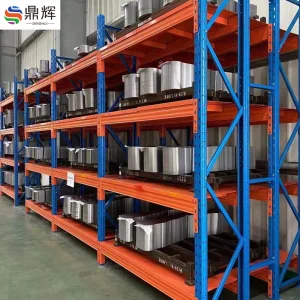
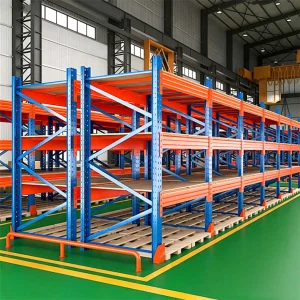
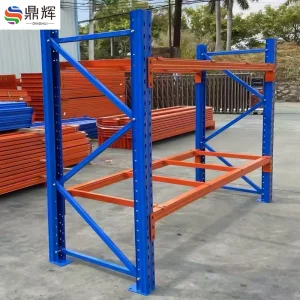
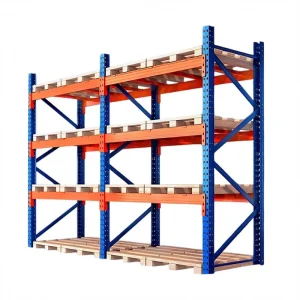
Selective pallet racking supports mixed-SKU storage, direct access, and adjustable beam levels. Heavy-duty beam shelving can be adapted for cartons, spare parts, and palletized inventory in e-commerce dispatch zones.
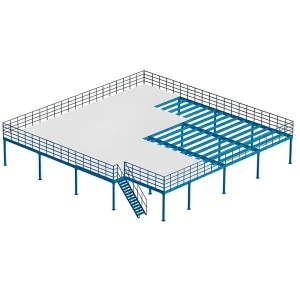
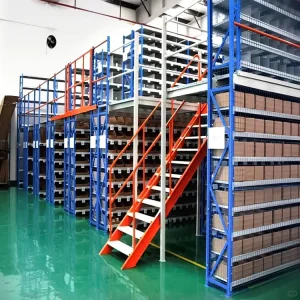
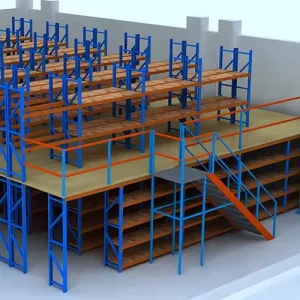
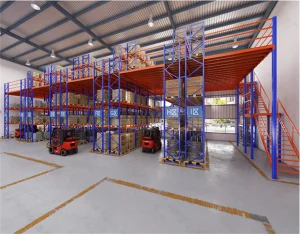
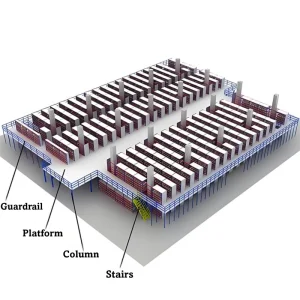
Mezzanine racking uses vertical space without expanding the building footprint. It is valuable in high-rent urban fulfillment centers for pick faces, packing stations, returns processing, and lightweight stockrooms.
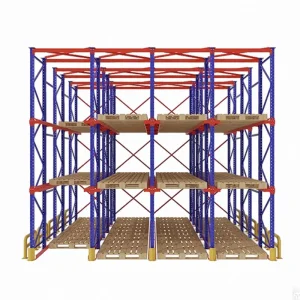
Drive-in racking increases storage density for low-SKU, high-quantity inventory. It suits buffer stock, seasonal promotions, and distribution centers where land cost or building height makes cubic utilization critical.
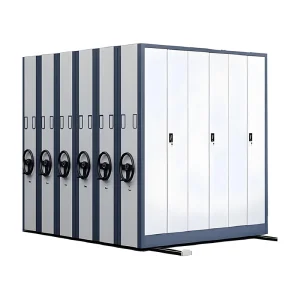
Mobile shelf and compaction systems reduce wasted aisle space for archives, documents, samples, and lower-turnover goods. They are useful where every square meter has a high opportunity cost.
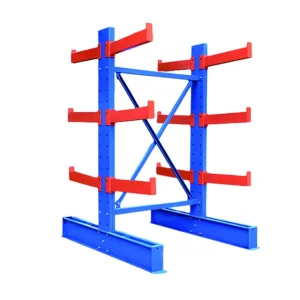
Cantilever shelves store pipes, profiles, timber, and long packaged items without obstruction. Q235B steel structures and adjustable arms improve access for building-material and industrial-supply distributors.
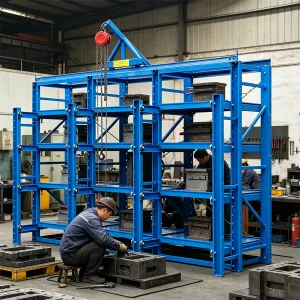
Drawer-style sliding mold racks support injection molds, dies, and heavy maintenance tools. They are relevant to factories that need organized, high-load storage close to production rather than remote warehouse space.
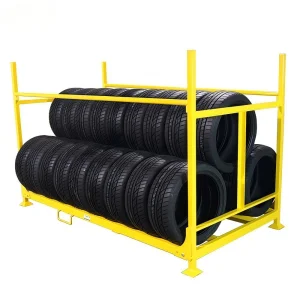
Corrosion-protected tire racks combine display and warehouse functions for automotive aftermarket distributors. Adjustability and clear labeling help manage seasonal tire demand and retail replenishment.
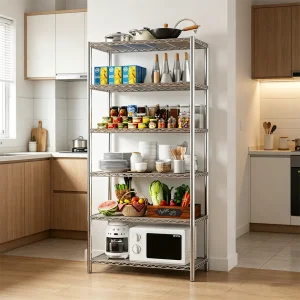
Freestanding adjustable wire racks support kitchen utensils, food supplies, small parts, and clean-room-adjacent storage. Electrolysis-treated surfaces and modular shelves simplify cleaning and reconfiguration.
Localization is not translation. It is the alignment of product design, documentation, packaging, installation, and lifecycle support with the destination market’s rules and operating realities.
Foshan Dinghui describes raw material tensile testing, structural load-bearing simulation, powder coating adhesion tests, and weld non-destructive inspection (NDI) as part of its QA/QC protocol. Buyers should request the exact reports, sample frequency, acceptance criteria, and project traceability.
Powder coating is not one specification. Salt-spray hours, pre-treatment, coating thickness, cure schedule, touch-up kits, and color consistency should match indoor, humid, coastal, or high-temperature environments.
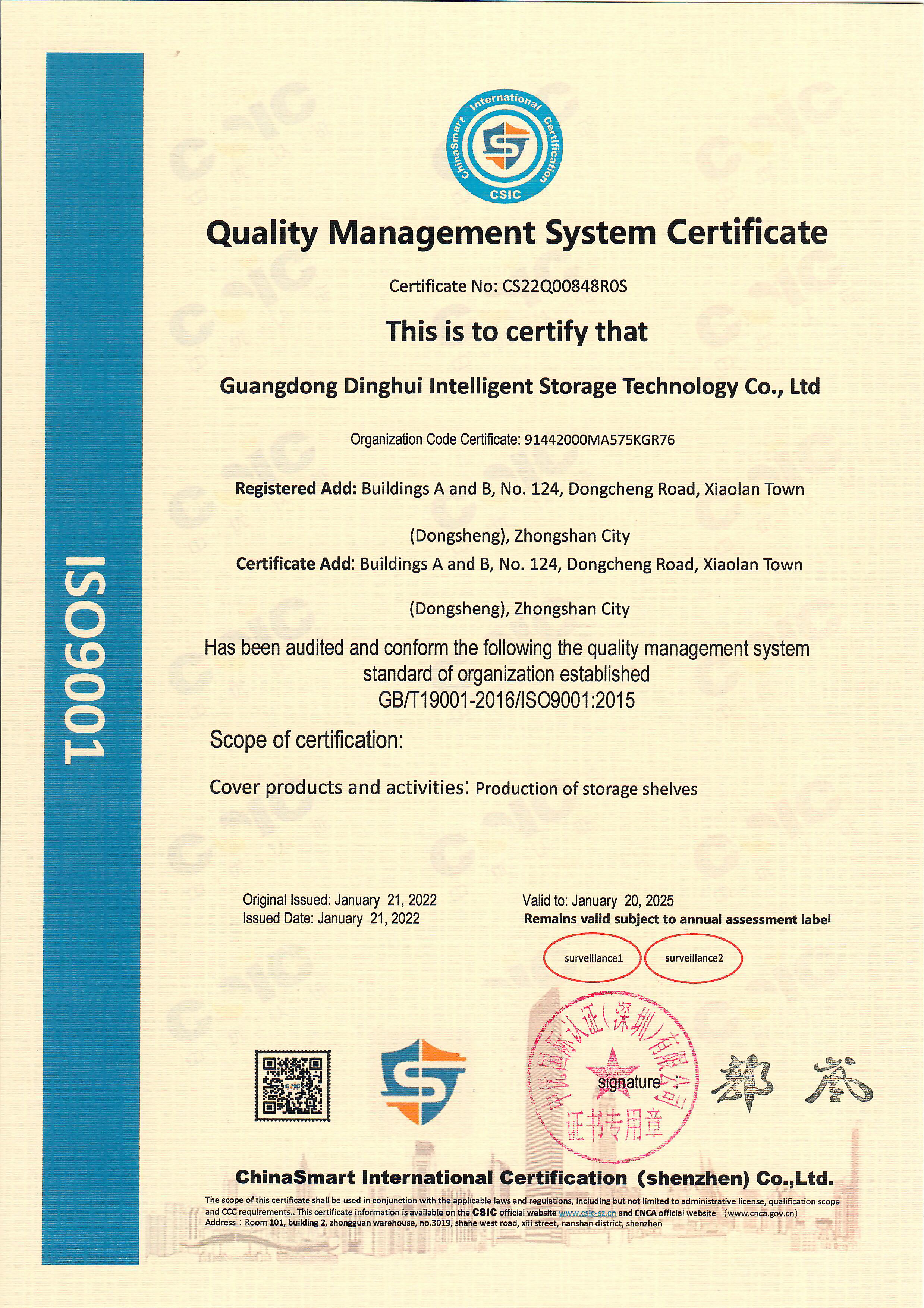
ISO 9001 and CE references should be checked for scope, issuing body, validity, and product coverage. For structural racking, local standards and project calculations may still govern approval. A logo is not a substitute for a compliance file.
Request slab flatness, concrete strength, anchor pull-out values, seismic zone data, and rack-to-floor connection details. In seismic or high-wind regions, a local structural engineer should review the final layout and anchorage plan.
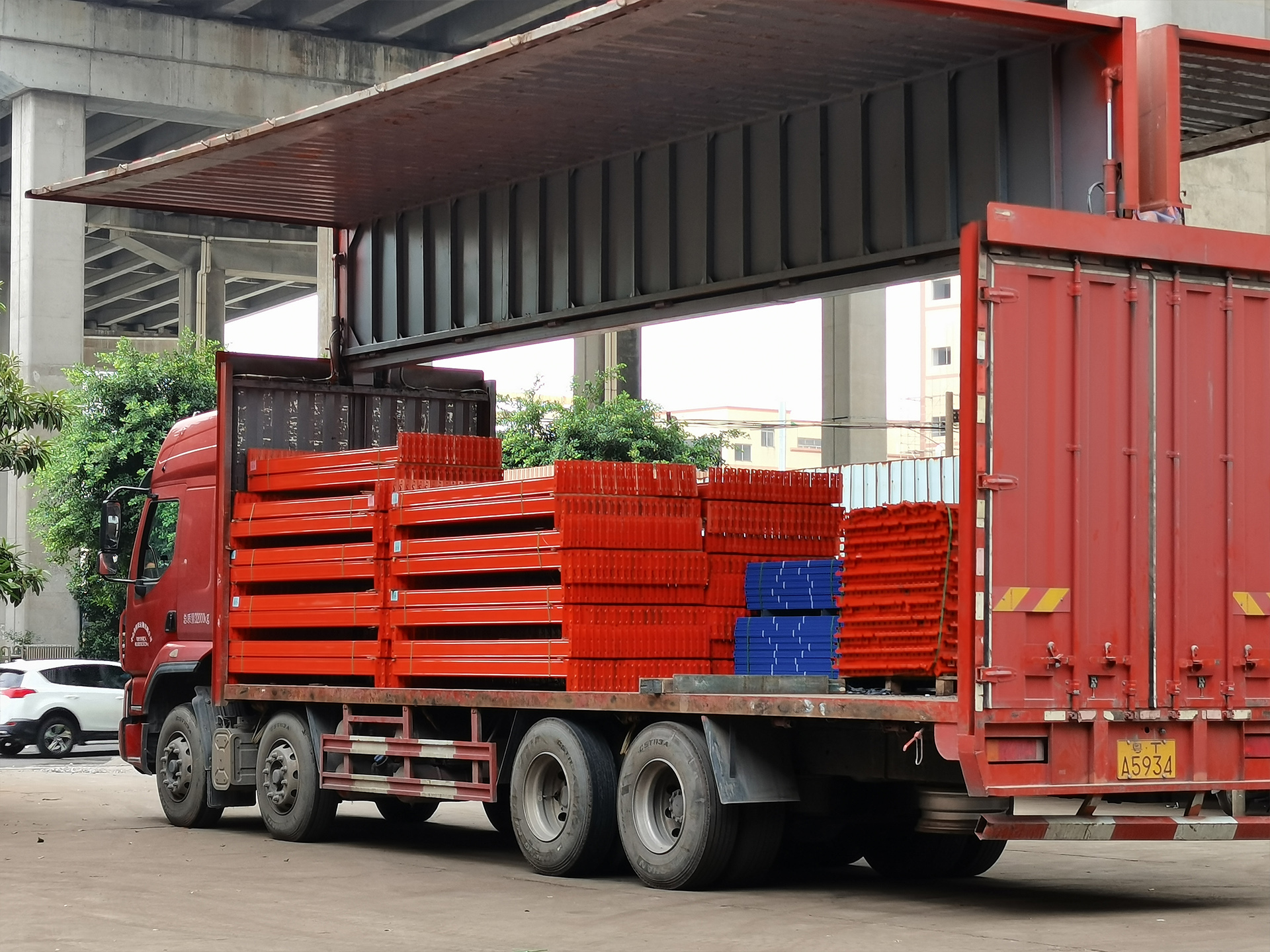
A clean container plan protects beams, columns, braces, and accessories. Include rust prevention, edge protection, labels, packing lists, installation drawings, spare parts, and inspection photos before shipment.
Method statements, toolbox talks, torque records, plumbness checks, load signage, periodic inspections, and replacement-part availability determine long-term safety. Clarify who provides them and in which language.
The same racking platform can be configured very differently depending on order profile, building envelope, labor model, and local regulation. These scenarios help buyers translate product categories into real operational decisions.
Adjustable beam levels, mobile shelving, wire racks, and clear labeling help 3PLs reconfigure space as client contracts change. In North America and Europe, documentation and installer competence are often as important as storage density.
Drive-in racking and mezzanine platforms create buffer stock and returns staging for promotions and peak events. In Southeast Asia and the Middle East, humidity, dust, and heat make coating selection and packaging protection critical.
High-rent urban facilities benefit from multi-tier shelving, compact picking areas, and stainless steel wire racks. The goal is fast access to many small SKUs without wasting floor space on idle inventory.
Corrosion-protected tire pallet display racks support distributors that combine warehouse storage with dealer or retail replenishment. Adjustable levels help manage seasonal tire lines and changing wheel sizes.
Drawer-style sliding mold racks and heavy-duty tool storage improve access to high-value production assets. These systems are often specified close to manufacturing cells, where space and handling speed matter.
Cantilever shelves store pipes, profiles, and timber for contractors and industrial distributors. The layout must consider forklift approach, load eccentricity, arm spacing, and safe unloading zones.
The following manufacturer information is retained from the original source and should be verified through certificates, project references, third-party inspection, and contract documents before purchase.
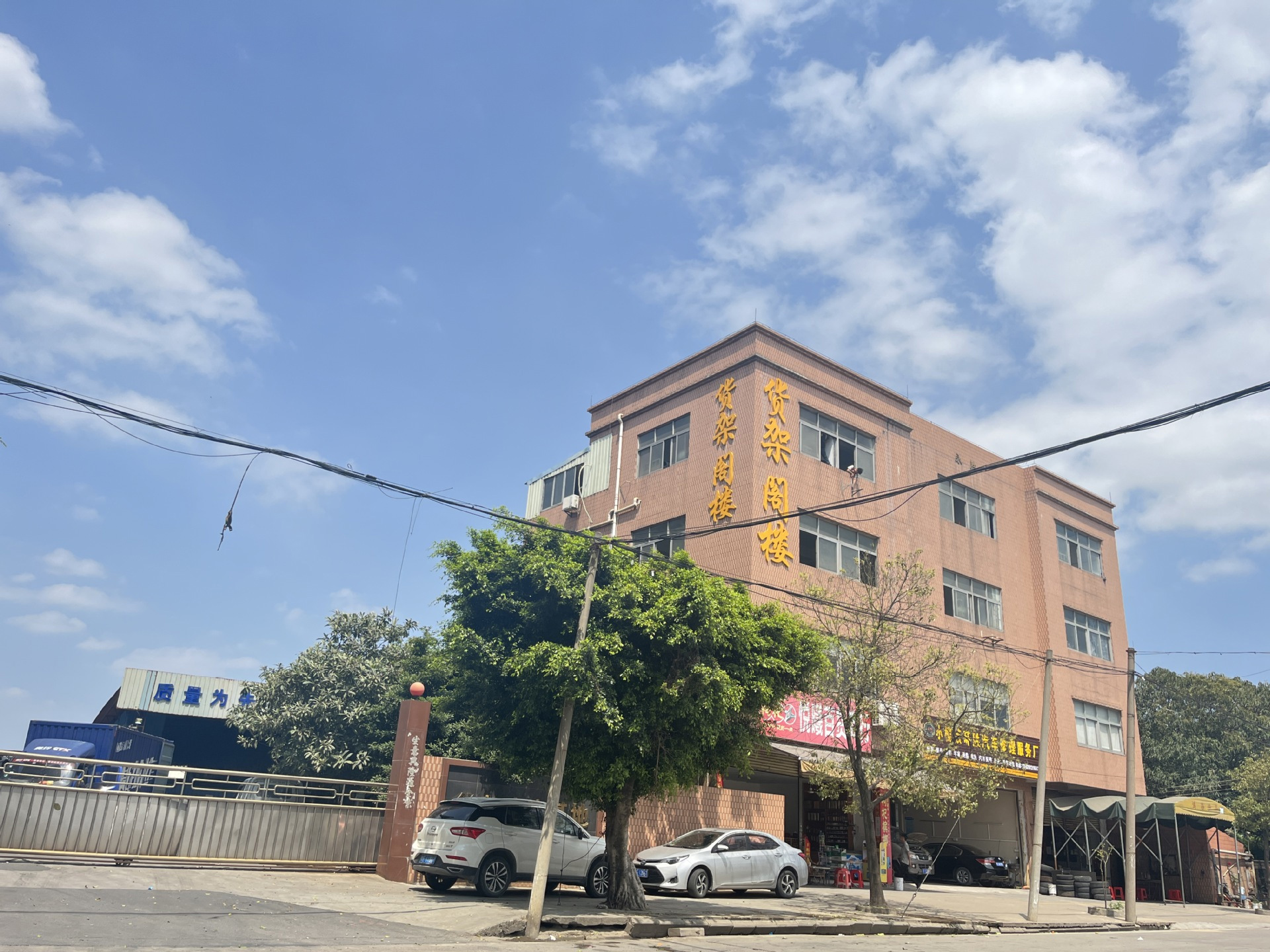
Foshan Dinghui Intelligent Warehousing Technology Co., Ltd., established in 2015, is a leading manufacturer specializing in heavy-duty industrial storage racks, pallet racking systems, and automated warehouse solutions. Spanning a modern manufacturing base of 38,000 square meters, we bring together 12 years of industry experience and 8 years of direct global export expertise, generating an annual export revenue of over $25 million USD.
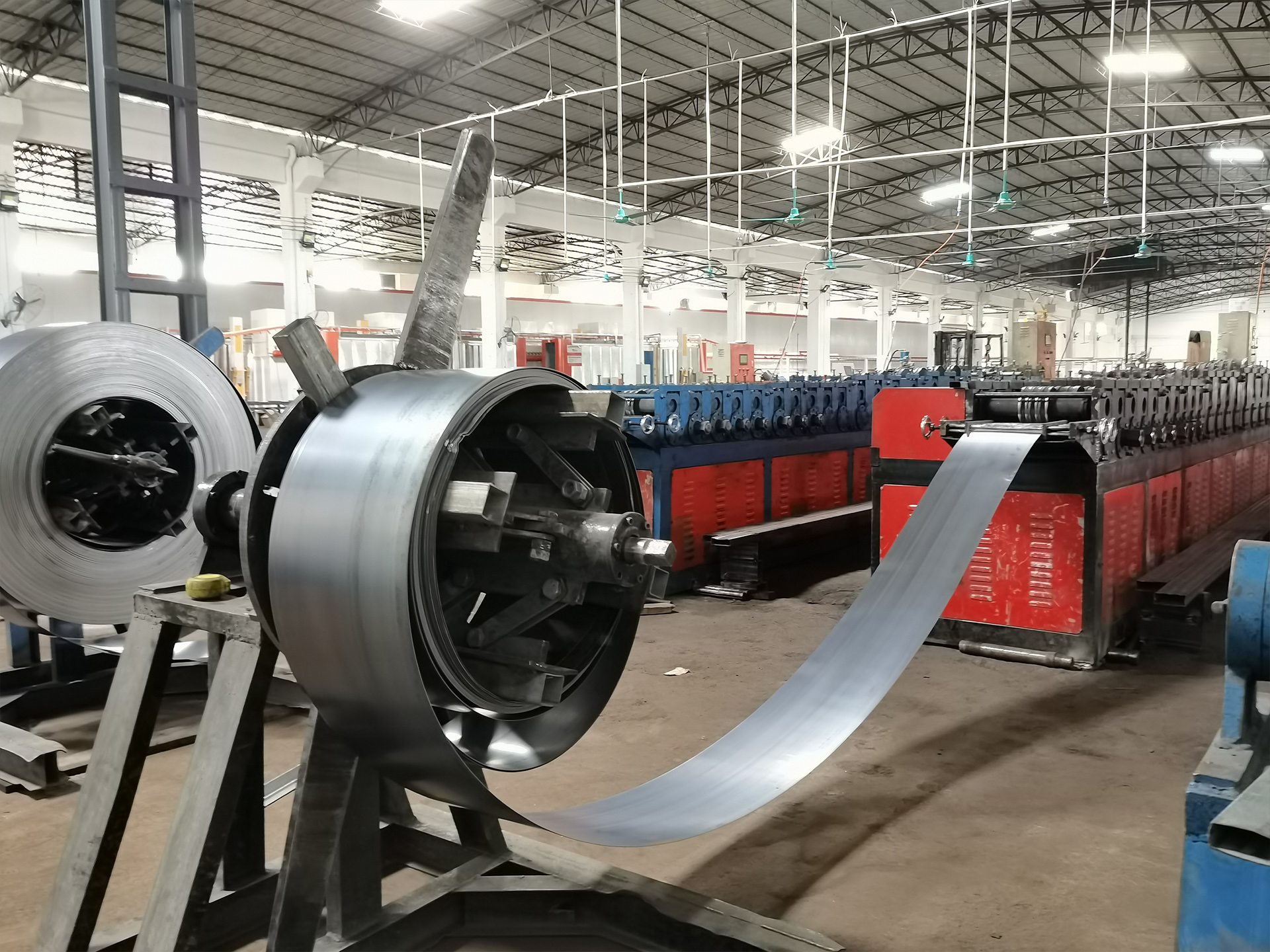
Equipped with advanced automated roll-forming and powder-coating production lines, our quality control procedures adhere to rigorous ISO 9001 and CE certification standards. We implement comprehensive product testing protocols, including raw material tensile testing, structural load-bearing simulation, powder coating adhesion tests, and weld non-destructive inspection (NDI). Supported by a dedicated 35-member QA/QC team, we ensure that every racking component strictly meets international safety and durability standards.
Operating with a strong international OEM/ODM trade background, our primary markets span North America, Europe, Southeast Asia, and the Middle East. Backed by a robust network of over 850 reliable supply chain partners, we serve a diverse global client base, including 3PL logistics providers, industrial warehouse operators, e-commerce fulfillment centers, and regional distributors.
Innovation and custom engineering drive our success. Supported by 18 experienced senior R&D engineers, we offer extensive OEM/ODM customization options, including tailored load capacities, custom dimensions, seismic-resistant structural design, special powder-coating finishes, and automated system integration. Driven by continuous technical improvement, we successfully launched 45 new product designs and structural upgrades last year, empowering our global partners to optimize their warehouse efficiency.
Established in 2015 with a 38,000 m² base, 12 years of industry experience, 8 years of export expertise, and more than $25 million USD in annual export revenue.
Automated roll-forming and powder-coating lines, 18 senior R&D engineers, and 45 new product designs and structural upgrades launched last year.
OEM/ODM trade background across North America, Europe, Southeast Asia, and the Middle East, supported by 850+ supply-chain partners and service to 3PLs, warehouses, e-commerce fulfillment centers, and distributors.
ISO 9001 and CE certification standards, tensile testing, structural load simulation, coating adhesion tests, weld NDI, and a 35-member QA/QC team. Buyers should validate scope and reports.
The future warehouse will be planned as a data-rich, modular, and automation-ready asset. Buyers should avoid locking in a layout that cannot adapt to changing order profiles, labor availability, energy costs, and robotics.
Start with 3D scanning, SKU profiling, order-history analysis, and digital-twin layout simulation. AI-assisted slotting and demand forecasting can reveal which rack typologies, aisle widths, and staging zones will actually support throughput.
Design racking around standard modules while preserving project-specific load calculations, floor tolerances, anchor plans, fire access, and future expansion points. This reduces change-order risk when automation is added later.
Prepare interfaces for AMRs, goods-to-person stations, conveyors, lifts, sensors, and WCS/WMS data exchange. Racking tolerances, pick-face heights, charging zones, and safety fencing must be considered before steel is ordered.
Digital inspection records, load sensors, coating warranties, modular retrofits, and reusable steel components support safer operations and stronger ESG reporting. The goal is a storage system that can be reconfigured rather than scrapped.
Use a consistent scorecard so quotations are compared on equivalent engineering and service assumptions. The scorecard also creates a written trail for local authorities, insurers, and internal safety teams.
Request a signed load chart by beam level, pallet footprint, and load pattern. Confirm deflection limits, safety factors, and assumptions for uneven loading.
Provide slab flatness, concrete strength, anchor type, pull-out values, seismic zone, and rack-to-floor details for local engineering review.
Specify pre-treatment, coating thickness, adhesion test, salt-spray expectation, touch-up kits, and color standard for the destination environment.
Collect ISO 9001 scope, CE documentation where applicable, material certificates, weld NDI records, coating reports, and inspection plans.
Review packing drawings, rust prevention, edge protection, labeling, container loading photos, spare-parts packing, and unloading sequence.
Ask for method statements, plumbness checks, torque records, safety signage, training materials, and escalation contacts for the local installer.
Confirm clearances, interface heights, sensor brackets, future mezzanine loading, AMR charging zones, and reserved space for controls or conveyors.
Define inspection frequency, replacement-part list, warranty terms, coating repair guidance, and reconfiguration support for future SKU changes.
Shortlist suppliers that answer technical and local questions in writing. Score across five weighted areas: structural safety 25%, compliance documentation 20%, localization support 20%, total landed cost 20%, and future automation plus lifecycle support 15%. Then use the preserved product links below to build an initial RFQ, request drawings, load charts, packing plans, and inspection records.
These answers help procurement teams move from a broad search query to a verifiable technical shortlist.
Request a signed load chart, pallet dimensions, beam-level configuration, material certificates, structural calculations, deflection limits, safety factors, and connection details. For critical projects, ask for third-party inspection or an independent local engineer’s review. The rated capacity must match the actual pallet pattern and installation conditions, not only a catalog label.
Collect ISO 9001 scope and validity, CE documentation where applicable, material test certificates, weld NDI records, powder-coating reports, anchor specifications, installation manuals, load signage, packing lists, and pre-shipment inspection reports. Then map those documents against local building, fire, seismic, and workplace-safety requirements.
Yes, but the automation interface must be planned early. Confirm tolerances, floor flatness, pick-face heights, sensor brackets, conveyor cut-outs, charging zones, fire access, and WCS/WMS data requirements before fabrication. Retrofitting automation into a rack system designed only for manual picking can create costly compromises.
Strong localization support includes local-unit drawings, bilingual labels and manuals, export packaging, spare-parts planning, installation method statements, remote commissioning support, and coordination with the buyer’s local engineer or installer. It should also include clarity on which party signs off structural and safety compliance in the destination country.
Normalize pallet positions, load ratings, steel sections, coating specification, accessories, packaging, freight, duties, installation, documentation, inspection, warranty, and spare parts. Build a total cost of ownership model that includes rework risk, downtime, maintenance, and future reconfiguration. A lower unit price can hide higher project risk.
Plan drawing approval, load verification, material preparation, fabrication, coating, packing, ocean freight, customs clearance, site readiness, installation, and final inspection. E-commerce peak seasons should be scheduled backward from the go-live date. Always confirm the critical path in writing, especially for custom dimensions, special finishes, or automated interfaces.
The remaining eight products preserve the original product links and image assets. Use them to compare rack typologies, corrosion-protection features, adjustability, and application fit for your fulfillment center or warehouse project.
 Dinghui Racking